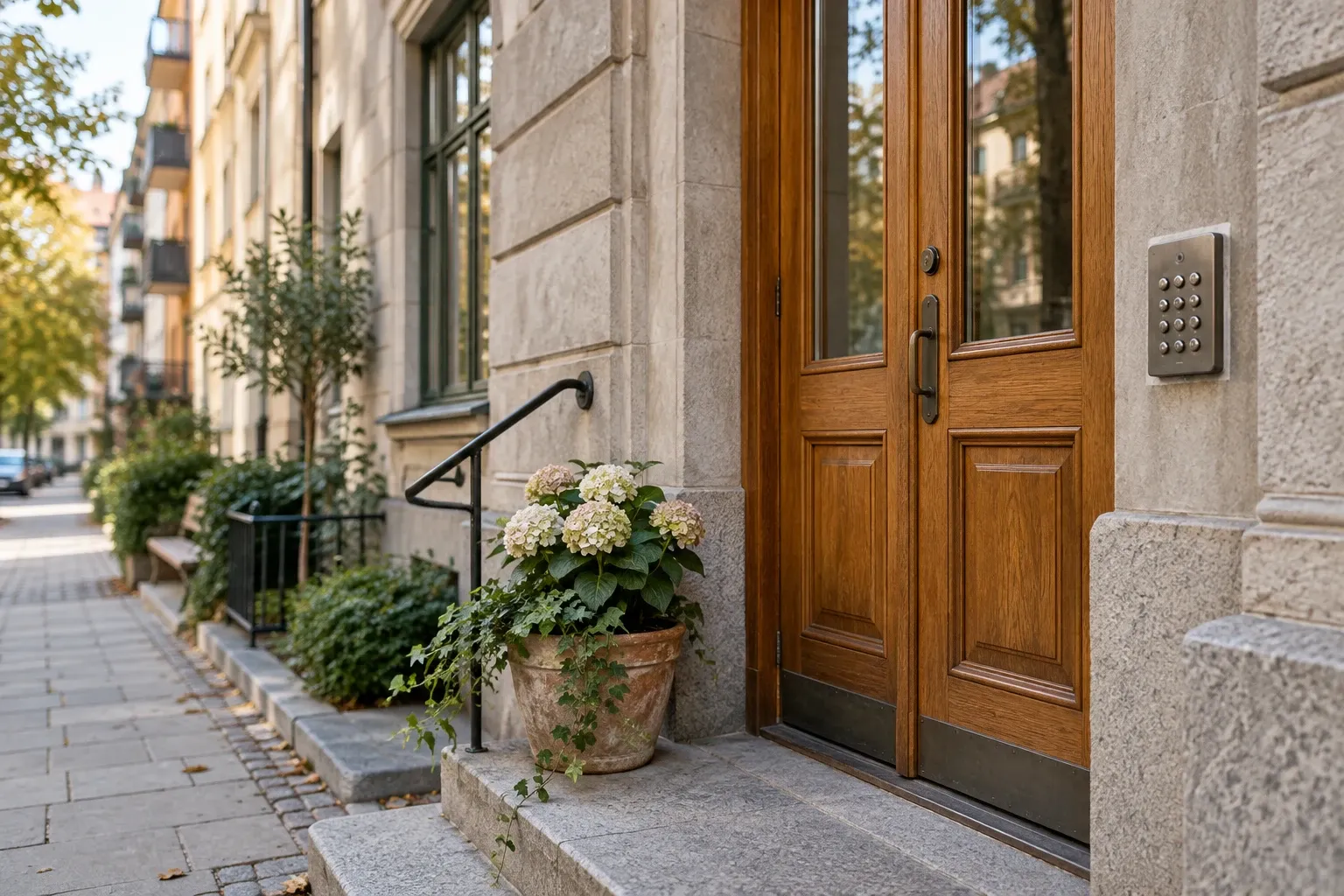
Booking a Swedish holiday rental on a platform is legal, and there is no tourist tax to add. What matters is who your host is, what the checkout total contains, and why Swedish hosts care so much about noise, rubbish and the laundry room.
When you need this
You are weighing a hotel against a flat in Stockholm, Gothenburg or Malmö, or a cabin by a lake. The nightly rate looked good, but the checkout total is higher. A host has sent house rules about quiet hours and sorted rubbish, asked for your passport, or suggested paying some other way. Or you have read that “new EU Airbnb rules” started in 2026 and want to know if they affect you.
Who you are dealing with: platform or host
A rental platform is a marketplace. Konsumentverket, the Swedish Consumer Agency, says the platform generally has limited responsibility for your stay, because the contract is usually between you and the host. The host’s terms and house rules are the ones you live with.
The single most useful thing on a listing is the host label. Under the Swedish Distance Contracts Act, the marketplace must tell you before you book whether the host is a business. If the host is not, it must also tell you that consumer-protection laws do not apply to that contract.
| Host type | Consumer law | ARN (consumer disputes board) | What protects you |
|---|---|---|---|
| Business (company or professional host) | Applies | Yes, for a 150 kr fee | Law, platform terms, the booking |
| Private person | Does not apply | No | Platform terms and your written agreement |
One thing does not change with the label: there is no 14-day right of withdrawal for accommodation booked for set dates. The cancellation policy on the listing decides what you get back. For choosing between agencies, platforms, campsites and private ads for a cabin week, see where to book a Swedish cabin.
What you pay: anatomy of the checkout price
The checkout price usually combines the host’s nightly rate, a cleaning fee if the host charges one, and the platform’s service fee. Swedish law requires a business to show the final price, including VAT, and to state separately any fees that may be added. EU consumer authorities also secured, through joint action, that the largest short-let platform shows the total including all mandatory charges and fees.
What you will not pay is a tourist tax. Sweden has no tourist, city or overnight tax. A municipality would need a law from the Riksdag to levy one, and none exists (why Sweden has no tourist tax). Where a business host rents hotel-style rooms, 12% VAT (moms) is already inside the price.
A deposit may be taken as a card hold. Under Swedish payment law, your bank may reserve only an amount you approved exactly, and must release it once the final amount is known. Our guide to card holds and deposits explains the timing.
The 2026 EU rules: what changed in Sweden
EU Regulation 2024/1028 on short-term rental data has applied since 20 May 2026. Many headlines call it “new Airbnb rules”. In fact the European Commission describes it as opt-in: member states are not obliged to apply it. It sets a common format for host registration numbers and platform data-sharing, but only where a country chooses to run a registration scheme.
Sweden’s starting point, in the government’s 2022 assessment, was no registration requirement for short-term lets, with a decision on whether to introduce one left for later. We found no Swedish registration scheme in October 2026. So a Swedish listing without a registration number is normal, and nothing changed at checkout for guests. We will review this if Sweden legislates.
Is the listing allowed? The host’s side of the law
Most city listings are flats in apartment blocks, and here Swedish housing law sets real limits on the host:
- A rental flat (hyresrätt): the tenant needs the landlord’s consent, or the rent tribunal’s permission, to sublet.
- A cooperative flat (bostadsrätt): the owner needs the housing cooperative board’s consent, or the tribunal’s permission.
- Since 1 July 2026, letting a cooperative flat the owner does not use as a permanent home always counts as a sublet. A flat kept only for short lets now needs board consent. Lets made before that date are not caught.
- A house or cabin owned outright needs no one’s consent to let.
Letting without the consent the law requires is a ground for the host to lose the flat. That is the host’s risk, but it explains a red flag: a host who asks you to tell the neighbours you are “a friend” may be letting without consent, and your stay can end early.
ID and the registration card
Anyone who runs commercial overnight letting in Sweden must have foreign guests fill in and sign a registration card and prove their identity with valid ID. Swedish citizens are not registered this way. Hotels do this at the desk, and a professional host may ask too.
A private person letting their own flat now and then is not the target of that rule, and many never ask. Larger establishments, with at least five guest rooms or nine guests at once, must also register with the police under the hotel act; unstaffed cottages and simple camping cabins are excluded. If you are asked for ID, show it in person or through the platform rather than emailing copies to an unknown address.
What Swedish hosts expect of guests
Swedish law makes a tenant answer for their guests. The tenant must keep careful watch that guests do not disturb the neighbours, and pays for damage guests cause through carelessness. Cooperative owners carry the same duty. Disturbance that neighbours should not reasonably have to tolerate can cost the host the flat. That is why the house rules can feel strict.
| Expectation | What it means in practice |
|---|---|
| Quiet hours | Apartment house rules commonly ask for quiet between 22:00 and 07:00. No national law sets the clock time |
| Laundry room (tvättstuga) | Book a slot on the building’s board or system; do not just use a free machine |
| Rubbish | Sort into the labelled bins in the waste room (soprum or miljörum) |
| Shoes | Take them off indoors |
| Cleaning | Leave the place to the listed standard; in cabins, final cleaning (slutstädning) is often your job |
| Linen | Check before packing; cabin guests often bring their own |
Before arrival, get the door code and how the keys work, the laundry booking system, and the way to the waste room. Our guides to staying in a Swedish apartment, quiet hours and noise rules and final cleaning cover each one in detail.
Payment and complaints
Pay inside the platform’s checkout. A host who asks you to move payment to a bank transfer or a payment app matches the rental-fraud pattern the Swedish Police describe: an attractive listing, money demanded in advance, and someone who cannot meet. Swish, Sweden’s mobile payment app, needs a Swedish bank account and BankID, so it is not a visitor’s payment method anyway. Fake listings are covered in rental scams in Sweden.
If something is wrong, photograph it on arrival and tell the host through the platform the same day. Keep messages on the platform, so the record stays with the booking. Paying a business by credit card gives you a claim against the card issuer. Against a business host you can also go to ARN, Sweden’s consumer disputes board; against a private host you cannot.
Practical information
| Item | Amount or rule |
|---|---|
| Tourist or overnight tax | None in Sweden |
| VAT on hotel-type room letting | 12%, inside the price |
| Nightly rate, cleaning fee, service fee | Set per listing; compare the checkout total |
| Deposit or card hold | Set by host or platform; only the exact amount you approved |
| Right to cancel within 14 days | None for accommodation on set dates |
| EU short-term rental regulation | Applies since 20 May 2026; opt-in; no Swedish scheme found (October 2026) |
| Cooperative-flat letting rule | Board consent needed; non-permanent homes always count as sublets since 1 July 2026 |
| ARN filing fee | 150 kr, business hosts only |
| Usual quiet hours (house rules) | 22:00–07:00 |
FAQ
Are Airbnb-style holiday rentals legal in Sweden?
Yes. Booking a flat, house or cabin through a rental platform is legal, Sweden has no tourist tax, and no national host registration scheme existed in October 2026. The legal limits sit with the host: a tenant or cooperative-flat owner needs the landlord’s or board’s consent to let the flat, and since July 2026 a cooperative flat the owner does not live in always counts as a sublet.
Do I pay a tourist tax on a holiday rental in Sweden?
No. Sweden has no tourist, city or overnight tax, and a municipality cannot levy one without a law from the Riksdag. What you see at checkout is the host’s price, any cleaning fee and the platform’s service fee. Where a business host rents hotel-style rooms, 12% VAT is already inside the price.
Did new EU short-term rental rules change anything in Sweden in 2026?
Not for guests. EU Regulation 2024/1028 has applied since 20 May 2026, but it only sets a common framework for host registration and platform data-sharing where a member state chooses to run a registration scheme. The Swedish government noted in 2022 that Sweden had no registration requirement, and no Swedish scheme was found in October 2026.
Can I cancel a Swedish holiday rental within 14 days?
No, not as a right. The Swedish Distance Contracts Act exempts accommodation booked for set dates from the 14-day right of withdrawal, whichever platform you use. The listing’s cancellation policy decides what you get back, so read it before paying. Check whether your travel insurance covers cancellation for illness or other reasons.
Why did my host ask for my passport?
A host who runs overnight letting as a business must, by Swedish law, have foreign guests fill in and sign a registration card and prove their identity with valid ID. Swedish citizens are not registered this way. A private person letting their own flat now and then often will not ask. Show ID in person or through the platform, not by sending copies to unknown addresses.
What do Swedish hosts expect from guests?
Quiet, especially from 22:00 to 07:00 in apartment blocks; rubbish sorted into the building’s labelled bins; the laundry room booked, not just used; shoes off indoors; and the place left clean. In cabins, guests often clean before leaving and bring their own linen. Hosts care because Swedish law makes them answer for their guests’ disturbance and damage.
Who do I complain to if the rental is not as described?
First to the host, through the platform, the same day, with photos. The platform generally has limited responsibility, because your contract is usually with the host. If the host is a business, you can take an unresolved dispute to ARN, Sweden’s consumer disputes board, for a 150 kr fee. A private host is outside ARN.
Related guides
- Where to book a Swedish cabin — agency, platform, campsite or private ad, and what each gives you.
- Staying in a Swedish apartment — door codes, laundry rooms and waste rooms on day one.
- Final cleaning in Swedish rentals — the room-by-room list hosts expect.
- Rental scams in Sweden — how fake listings work and what to do if you paid.
- Card holds and deposits — why money is blocked and when it comes back.
Facts verified 2026-10-15. Sources: Konsumentverket, European Commission, Regeringskansliet, Sveriges Riksdag (Lag 2005:59, Prisinformationslag 2004:347, Jordabalken, Bostadsrättslag 1991:614, Utlänningsförordning 2006:97, Lag 2024:1082, Lag 2010:751, Regeringsformen), Skatteverket, Polismyndigheten, ARN — full register in this topic’s source file. Found something outdated? Tell us and we’ll fix it.