A colored symbol on the SMHI app tells you how much the weather will disrupt the place you’re in, not how extreme the weather is. Here’s what each color means for a drive, a hike or a ferry, and where to read it in English.
When you need this
A yellow circle or orange diamond has just appeared on the SMHI page for where you are. Swedish radio mentions orange varning (orange warning) for tomorrow’s route. You have a ferry to Gotland, a long winter drive or a mountain day planned, and you need to know whether to go. Or you’ve spotted meddelande om brandrisk and wonder whether it’s a warning.
The three levels and what to do
SMHI (Sveriges meteorologiska och hydrologiska institut) is Sweden’s national weather agency, and running the weather-warning service is one of its legal duties. Its warnings come in three levels, each with its own shape, so you can tell them apart without color:
| Level | Symbol | SMHI’s meaning | What a visitor does |
|---|---|---|---|
| Yellow | Circle | Consequences for society, some risk to the public | Check plans and operators; expect delays |
| Orange | Diamond | Serious consequences, danger to the public | Postpone unnecessary travel and outdoor trips |
| Red | Triangle | Very serious consequences, great danger | Stay where you are; follow local advice |
Yellow is not “severe”. It means slower roads, delayed buses, fallen branches, flooded basements. It’s a reason to check, not usually to cancel. Orange is where a visitor’s plans should change. For snow and sudden ice, SMHI’s advice is to avoid unnecessary travel and to be ready to get stuck. Red is rare and means stay put. For snow, SMHI says “Ge dig inte ut i trafiken”: don’t go out on the roads at all.
Since October 2024 every warning text includes a section headed “Vad ska jag tänka på?” (“What should I keep in mind?”) with concrete actions, and a link to Krisinformation.se, the government’s crisis-information site.
Why the same snow warns differently
Since 26 October 2021 SMHI’s warnings have been impact-based (konsekvensbaserade). The level depends on what the weather is expected to do to people and society in a given area, not on a fixed amount of snow or wind. That replaced the old “class 1, 2, 3” system, which some English pages still describe.
So thresholds vary with the region, the time of day, the season and the weather that came before. Krisinformation’s own example is 20 mm of snow, which can mean different levels in different places and months. SMHI says heavy snow in a southern city causes more disruption than the same amount in the northern interior. Read the color, not the millimeters, and don’t compare it with what’s normal at home.
County boards (länsstyrelser) help set the level: before a warning, they consult municipalities and rescue services about local risk. When weather develops fast, SMHI decides alone. Warnings are published up to three days ahead.
Warning types and how high each can go
Not every hazard can reach red. This is the table most guides leave out:
| Warning type | Swedish | Levels possible |
|---|---|---|
| Wind (gusts on land) | vind | Yellow, orange, red |
| Snowfall; snowfall with wind | snöfall | Yellow, orange, red |
| Wind with snow on the bare mountain | kalfjäll | Yellow, orange, red |
| High sea level | högt vattenstånd | Yellow, orange, red |
| High river flows | höga flöden | Yellow, orange, red |
| Severe thunderstorm | åska | Yellow, orange |
| Cloudburst-type rain | skyfallsliknande regn | Yellow, orange |
| Sudden black ice and ice coating | plötslig ishalka | Yellow, orange |
| High temperatures | höga temperaturer | Yellow, orange |
| Sustained rain | regn | Yellow only |
| Low sea level | lågt vattenstånd | Yellow only |
| Strong wind chill | stark kyleffekt | Yellow only |
| Wind and icing at sea | medelvind / nedisning till havs | Wind: yellow, orange, red |
A few have published numbers. The heat warning is yellow when the day’s maximum is expected to reach 30 °C or more for three to four days running, and orange at 30 °C for five days or 33 °C for at least three. The wind-chill warning is issued when mean wind is at least 10 m/s and the effective temperature is −28 °C or lower. At sea, mean wind of 14 m/s gives yellow, 25 m/s orange and over 30 m/s red. For river flows, yellow is roughly a 5–25-year event, orange 25–50 and red over 50.
A yellow-only warning isn’t a minor one. A yellow wind-chill warning is still a frostbite warning.
Messages are not warnings: heat, fire risk, water shortage
SMHI also issues meddelanden (“messages”) with no color level. They cover situations that mainly affect sensitive groups, or that make something possible rather than likely. There are three kinds: high temperatures, risk of water shortage and grass- or forest-fire risk.
Heat exists as both. The heat message is aimed at risk groups such as the elderly, small children and the chronically ill. It can be upgraded to a yellow or orange warning once the 30 °C criteria are met. If you travel with any of those groups, take the message seriously.
Fire risk never becomes a warning. SMHI is explicit: fire risk can only be issued as a message. Krisinformation’s English page lists grass and forest fires among warning types, but SMHI is the agency that issues them, so follow SMHI. Whether you may light a fire is a different, legal question: a fire ban (eldningsförbud) decided by the county board or municipality. See how to check for a fire ban.
On the road, on the mountain, at sea
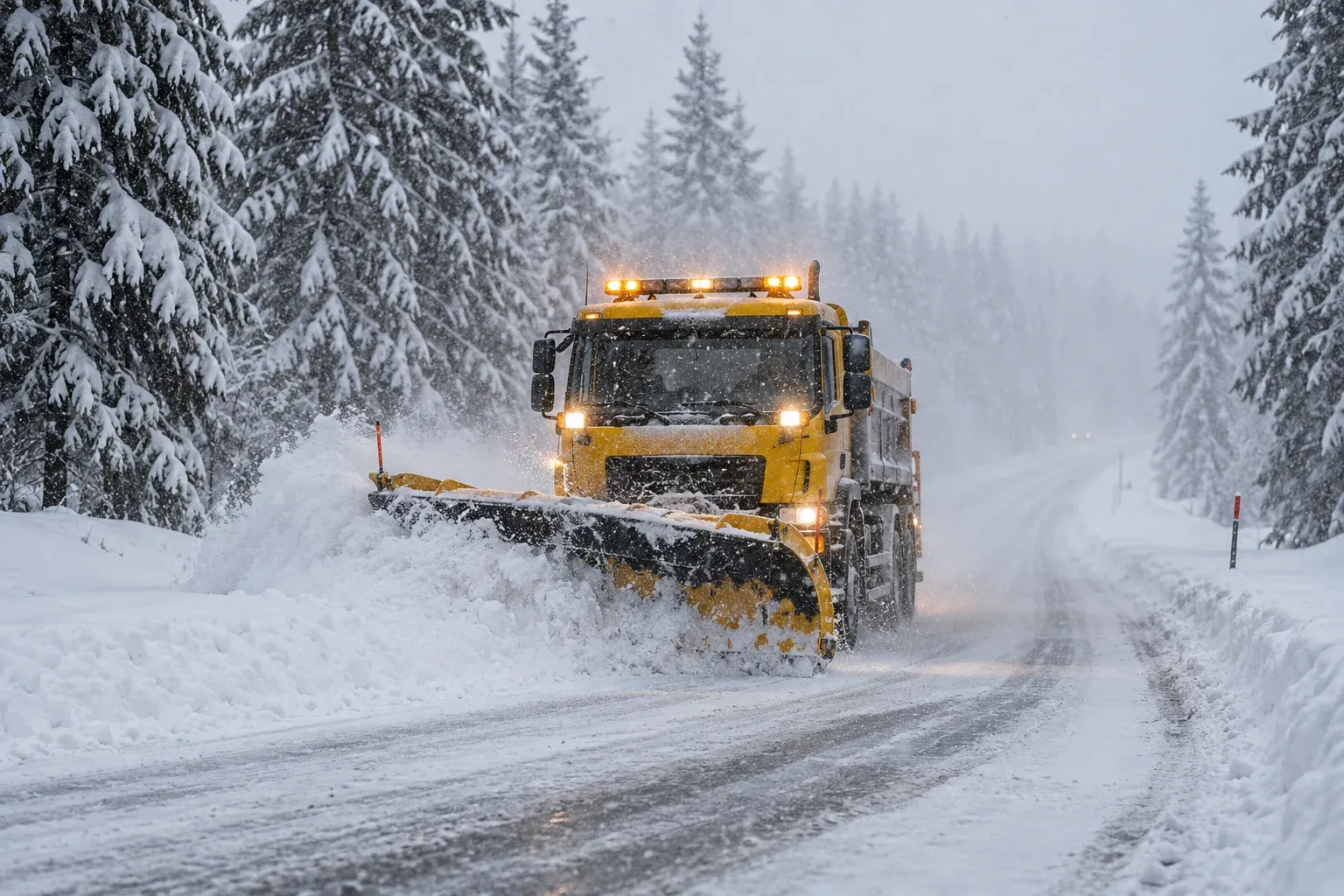
Driving. Under an orange snow or ice warning, SMHI advises avoiding unnecessary travel and expects public-transport cancellations. Under a red one, don’t drive. Under rain, thunder or high-flow warnings, never drive through standing water. Check Trafikverket’s road map before you leave; winter driving in Sweden covers the kit and technique.
Forests and wind. Stay out of forests during and after a wind warning. Fallen and hanging trees block roads and trails, and at orange, power and phone outages are likely, so you may not be able to call for help.
The mountains. The kalfjäll warning covers wind with snow on bare high ground, from roughly 700–900 m depending on region. At yellow, SMHI says “Ställ in fjällturen om du inte är ordentligt fjällvan”: cancel the trip unless you’re an experienced mountain hiker. At orange, navigation becomes very difficult and rescue slow and dangerous. At red, being on the mountain is a danger to life. Plan routes with mountain safety in Sweden.
Thunderstorms. Get indoors, keep away from tall objects and don’t swim.
At sea and on ferries. At orange sea-wind level, don’t go out in a small boat or kayak; rescue becomes risky and slow. Ferry operators cancel on the forecast, not on the weather in port. In December 2025, an orange wind warning for northern Gotland came with cancelled and rescheduled Destination Gotland sailings on both mainland routes, affecting about 2,700 booked passengers. Check the operator before driving to the terminal.
What red looks like. On 1–2 January 2026, SMHI issued a red warning for snowfall combined with wind in coastal Gävleborg, with 40–60 cm of snow forecast. People were told not to drive, and trains were cancelled.
Getting warnings in English
- smhi.se in English. SMHI publishes its warnings in English on its website. When a warning is active, it shows at the top right of the page, or at the very top on a phone.
- The SMHI Väder app is free and ad-free and shows warnings and messages on a map. Its App Store listing gives Swedish as the only language (checked 1 October 2026), so use the app for symbols and the website for English text.
- Krisinformation.se explains the levels in English and posts English news on major warnings.
- Sveriges Radio carries warnings in its weather reports, in Swedish.
Check the evening before and again on the morning of a drive, ferry or mountain day. Warnings change as the forecast firms up.
Weather warnings vs VMA and the siren
A weather warning won’t set off the outdoor siren. SMHI’s warnings reach you through smhi.se, the apps, Krisinformation.se and radio weather reports. The siren, nicknamed Hesa Fredrik, and SE-Alert phone alerts belong to the separate VMA system (Viktigt meddelande till allmänheten, “important public announcement”) for acute threats where authorities need people to act at once. If you hear the siren outside test time, follow Sweden’s emergency alerts guide: go indoors, close up and listen to P4.
Practical information
| Item | Detail |
|---|---|
| Issued by | SMHI, around the clock |
| Levels | Yellow circle, orange diamond, red triangle |
| System | Impact-based and regional since 26 October 2021 |
| Lead time | Up to three days ahead |
| English | smhi.se; Krisinformation.se |
| App | SMHI Väder, free, no ads; Swedish only per App Store (checked 2026-10-01) |
| Messages (no level) | High temperatures, water shortage, fire risk |
| Heat warning | Yellow: 30 °C+ for 3–4 days; orange: 30 °C for 5 days or 33 °C for 3 |
| Wind-chill warning | Yellow only: mean wind 10 m/s+, effective temperature −28 °C or lower |
| Sea-wind warning | Yellow 14 m/s, orange 25 m/s, red over 30 m/s |
| Fire bans | Separate decision by county board or municipality |
| Cost | Free |
FAQ
What does a yellow weather warning mean in Sweden?
Yellow is the lowest of SMHI’s three levels: the weather can cause consequences for society and some risk to the public. Expect slower roads, delays to public transport, fallen branches or flooded basements. It is a reason to check your plans and the operators, not usually to cancel. Some warning types, like wind chill, only exist at yellow.
Should I drive during an orange warning?
Avoid it if you can. SMHI’s orange texts for snow and sudden ice say to avoid unnecessary travel, expect to get stuck and allow much more time; public transport cancellations are likely. For wind, power and phone outages are likely and driving is hazardous. If you must go, check Trafikverket’s road map first and carry warm clothes, food and a charged phone.
What should I do under a red warning?
Stay where you are and follow local advice. Red means very serious consequences and great danger to the public. For snow SMHI says do not go out on the roads; on the high mountain, being out is dangerous to life. Expect widespread cancellations and long power cuts, and keep a phone charged.
Does SMHI issue warnings in English?
Yes, on its website: SMHI publishes its warnings in English on smhi.se, and an active warning appears at the top of the page. The SMHI Väder app lists Swedish as its only language on the App Store, so use it for the map and symbols. Krisinformation.se also explains the levels in English.
Is there a fire-risk warning?
No. SMHI issues fire risk for grass and forest only as a message, never as a yellow, orange or red warning, and a message cannot become a warning. Whether you may light a fire is a separate legal decision — a fire ban by the county board or municipality — shown on Krisinformation’s fire-ban map.
Will a weather warning set off the siren or a phone alert?
Not as such. SMHI warnings reach the public through smhi.se, the SMHI and Krisinformation apps, Krisinformation.se and Sveriges Radio weather reports. The outdoor siren and SE-Alert phone alerts belong to the separate VMA system for acute threats, used when authorities need people to act immediately.
Why is there a warning here when the north gets more snow every week?
Because the warnings are impact-based. SMHI calibrates thresholds to local conditions, the time of day, the season and preceding weather, so a snowfall that is routine in the northern interior can cause serious disruption in a southern city. The color tells you the expected impact where you are, not the amount of snow.
Related guides
- Sweden’s emergency alerts — the siren, VMA and SE-Alert, the other warning system
- Fire bans in Sweden — the legal decision a fire-risk message isn’t
- Winter driving in Sweden — kit and technique when a snow or ice warning is out
- Mountain safety in Sweden — route planning under a mountain warning
- Sweden’s weather by month — what weather to expect when you go
Facts verified 2026-10-01. Sources: SMHI, Krisinformation.se, Länsstyrelsen, Sveriges Riksdag and SVT — full register in this topic’s source file. We publish no current weather warning or fire-ban status. Found something outdated? Tell us and we’ll fix it.