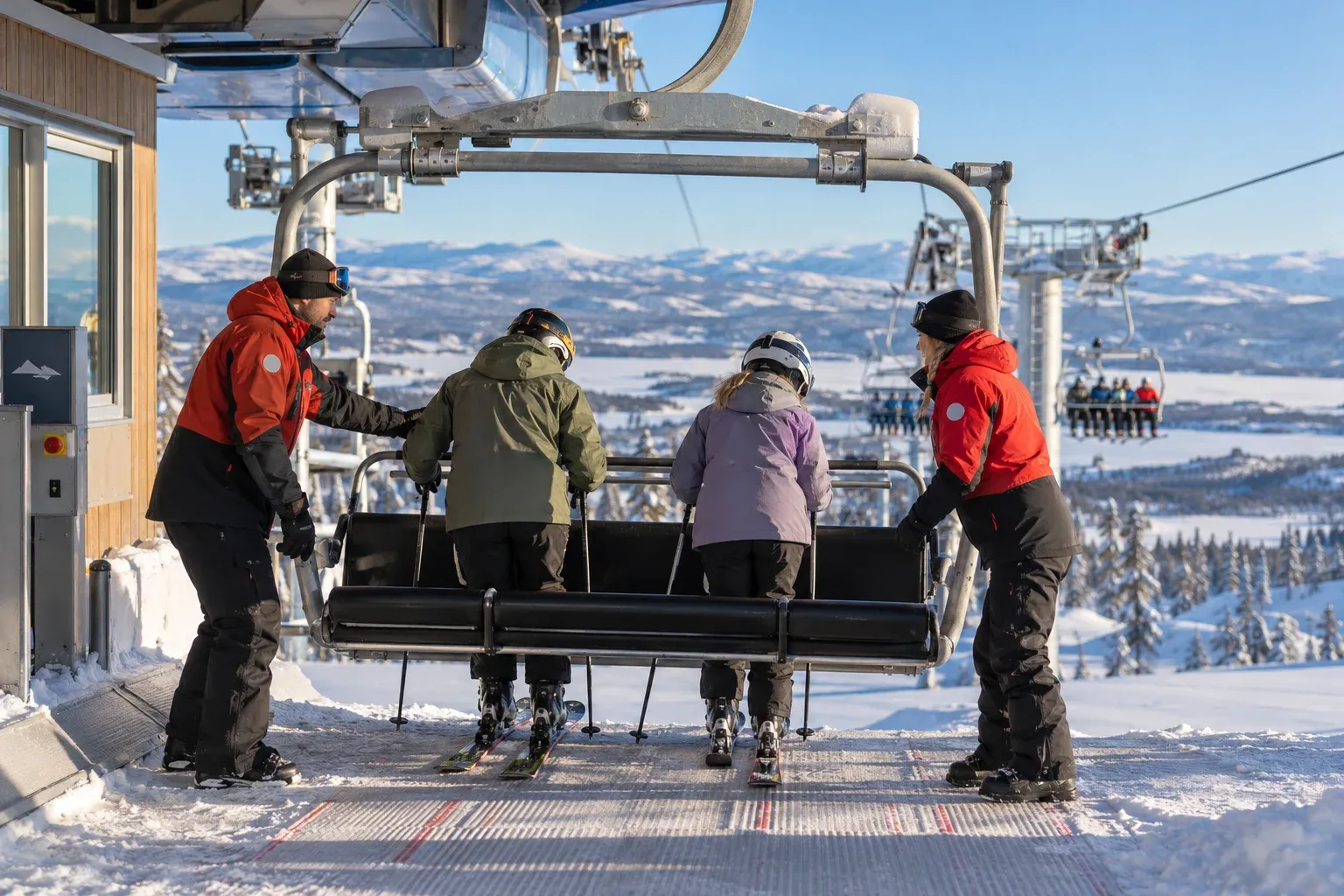
A winter in Åre or a summer behind a bar in the archipelago is a classic way to see Sweden. Whether you may take the job depends on your passport, and the rules for non-EU workers changed on 1 June 2026.
When you need this
You have been offered a ski season and want to know if you can say yes. You are an EU citizen wondering what paperwork a summer job involves. An agent has offered you “a Swedish summer-work visa” for a fee. Or your first payslip shows a lot of tax and colleagues keep mentioning SINK. This page covers all four.
Which route applies to you
Seasonal work is work that can only be done in part of the year because of the weather: Migrationsverket, the Swedish Migration Agency, names hotels and restaurants, ski and golf resorts, tourism, amusement parks and farming. Your route depends on your citizenship.
| You are | What you need | Notes |
|---|---|---|
| EU/EEA citizen | Nothing | Start work the day you arrive; no contact with Migrationsverket |
| Swiss citizen | Residence permit after three months | Shorter jobs need no permit |
| 18–30 from Australia, Canada, Hong Kong, Japan, New Zealand or South Korea | Working-holiday permit | Up to a year, work allowed; see working holiday visa for Sweden |
| Anyone else | Seasonal work permit (tillstånd för säsongsarbete) | Granted before you enter the EU |
Warning: The 90 visa-free days do not include a right to work. Swedish law requires a work permit for anyone who works in Sweden, and a seasonal permit cannot be granted once you have entered the EU. If you come as a tourist and apply later, the season is lost.
The seasonal work permit after June 2026
The seasonal work permit is Sweden’s version of the EU Seasonal Workers Directive, set out in chapter 6 c of the Aliens Act (utlänningslagen). Two changes on 1 June 2026 matter most, and most websites have not caught up with either:
- Up to nine months in any twelve, as one permit or several. The old limit was six months.
- The pay floor is the collective-agreement minimum for full-time work, even if your job is part-time.
The full list of requirements:
- A signed contract for fixed-term seasonal work with an employer established in Sweden
- Pay and conditions no worse than Swedish collective agreements or practice in the trade
- Comprehensive health insurance for the whole stay: urgent and other care, hospital, emergency dental care and repatriation
- Housing of appropriate standard that you rent, sublet with consent or own. That means heating, hot and cold water, a toilet and shower, a kitchen and laundry access. Staying in a relative’s home does not count
- Living outside the EU when you apply, and intending to leave when the permit ends
How it works: your employer starts the application in Migrationsverket’s e-service, and the relevant trade union gets a chance to comment on the terms. You then complete your part, attach your documents and pay SEK 2,000. You show your passport in an app or at an embassy and wait for the decision abroad. By law a decision is due within 90 days. Migrationsverket’s figures show 75% of complete applications decided within two months. Jobs under 90 days give a work permit only, and some nationalities also need an entry visa. Longer jobs come with a residence permit card.
If the employer houses you, the rent must be reasonable for the standard and your pay. You must get the tenancy terms in writing, and rent may come out of your wages only with your written consent in advance. If you move, tell Migrationsverket. Failing to do so can cost you the permit and, at worst, bring a fine or up to six months in prison.
Changing employer is allowed if the new job is seasonal and was advertised. Apply before your current permit expires and you can keep working while you wait. If you are coming back for a second season, keep every payslip: returning workers must submit them, and those who followed the rules get faster handling.
Berry picking
Since 1 June 2026, forest berry pickers can no longer get an ordinary work permit, and companies not established in Sweden can no longer bring pickers in. That is not the end of the route, though. A picker employed by a company established in Sweden can still apply for a seasonal work permit, with the same pay, housing and insurance rules as everyone else. Picking berries for yourself is a different matter, covered in berry picking in Sweden.
Pay, contracts and holiday pay
Sweden has no minimum wage set by law. Pay floors are in collective agreements (kollektivavtal). In hotels and restaurants the main one is the Visita–HRF Gröna riksavtalet, which runs 2025–2027. An employer without an agreement is bound only by labour law. So ask, before you sign, which agreement applies: it sets your pay floor, unsocial-hours supplements, overtime and pension.
| Your right | What the law says |
|---|---|
| Written terms | By the seventh calendar day of work: pay, hours, end date, that the job is seasonal, and any collective agreement |
| Holiday pay instead of leave | Allowed by agreement for jobs meant to last at most three months |
| Holiday pay amount | At least 12% of earned wages under the statutory percentage rule; agreements can give more |
| When it is paid | Within one month of the job ending |
Tax and ID numbers
Work in Sweden for six months or less and you can apply for SINK (särskild inkomstskatt för utomlands bosatta), a flat tax for non-residents. It is 22.5% in 2026 and 20% from 1 January 2027, and you file no Swedish tax return. You or your employer must apply, once per income year. Without a SINK decision your employer withholds ordinary preliminary tax, at higher rates. Stay six consecutive months or more and you are taxed as a resident (how Swedish tax works).
A short season does not get you a personnummer. Instead you need a coordination number (samordningsnummer). You can apply for one yourself if you plan to stay less than a year, and you must prove your identity in person. It does not come automatically with SINK. Without a personnummer there is no BankID, so plan to pay by card; the coordination-number guide covers the bank account.
Spotting a fake job offer
Migrationsverket says it plainly: only the agency decides permits, and no company or agent can promise you one. Its checks:
- Look up the company’s organisation number at Skatteverket. If it doesn’t exist, it’s a scam
- Call the company on its public number and write only to its official e-mail address
- Pay fees to no one but Migrationsverket, and never pay back part of your wages
- Treat housing at the workplace, or a small flat shared by many, as a warning sign
Report scams to the police in the country where they happened and send Migrationsverket a tip. There’s more on scams in tourist scams in Sweden.
Mistakes to avoid
- Quoting the six-month cap. It has been nine months since June 2026. Even one paragraph on Migrationsverket’s own page still says six, but the statute says nine.
- Accepting part-time pay below the full-time floor on a seasonal permit.
- Planning to stay with a relative. That fails the housing requirement.
- Skipping SINK and overpaying tax all season.
- Working without written terms. You are entitled to them by day seven.
Practical information
| Item | Amount |
|---|---|
| Seasonal work permit application | SEK 2,000 |
| EU/EEA citizen | No permit, no fee |
| Maximum seasonal permit time | 9 months in any 12 |
| SINK tax rate | 22.5% in 2026; 20% from 2027 |
| Holiday pay, statutory minimum | 12% of earned wages |
| Wages | Collective-agreement minimum for the job; no statutory minimum wage |
| Health insurance | Market price |
| Processing, complete application | 75% decided within 2 months |
Figures checked 2026-10-06. Ski seasons run roughly December to April, so apply in late summer or autumn. Summer jobs peak from June to August, and berry season runs about late July to September.
FAQ
Can I get a seasonal job in Sweden as a foreigner?
Yes, but the route depends on your passport. EU and EEA citizens can start work on arrival with no permit. Young Australians, Canadians, Hongkongers, Japanese, New Zealanders and South Koreans can use a working-holiday permit. Everyone else needs a seasonal work permit, applied for with a Swedish-established employer and granted before entering the EU.
How long can I work in Sweden on a seasonal work permit?
Up to nine months in total in any twelve-month period, as one permit or several, since 1 June 2026. Before that the limit was six months, which many websites still quote. A permit never runs longer than the job or your passport, and it can be extended up to the nine-month total from inside Sweden.
Can I work in Sweden on the 90 visa-free days?
No. The visa-free period lets you visit, not work. Swedish law requires a work permit for anyone who works in Sweden, unless you are an EU/EEA citizen or hold a permit that includes work, such as a working-holiday permit. A seasonal work permit must be granted before you enter the EU, so you cannot fix it after arrival.
What is the minimum wage for seasonal work in Sweden?
Sweden has no minimum wage set by law. Pay floors are in collective agreements, such as Visita and HRF’s agreement for hotels and restaurants. For seasonal work permits, the law since 1 June 2026 requires at least the agreement’s lowest full-time wage, even if you work part-time. Ask your employer which agreement applies and check it.
How much tax do seasonal workers pay in Sweden?
If you work in Sweden for six months or less, you can apply for SINK, a flat tax of 22.5% in 2026 and 20% from 2027, with no Swedish tax return. You or your employer must apply each income year; without a decision the employer withholds ordinary preliminary tax at higher rates. Six months or more means normal resident taxation.
Can berry pickers still come to Sweden in 2026?
Partly. Since 1 June 2026 forest berry pickers cannot get an ordinary work permit, and companies not established in Sweden can no longer bring them. A picker employed by a company established in Sweden can still apply for a seasonal work permit, with the same pay, housing and insurance requirements as any seasonal worker.
How do I avoid seasonal job scams?
Check the company’s organisation number at Skatteverket, call it on its public number, write only to its official e-mail and read the contract carefully. Never pay fees to anyone but Migrationsverket and never repay wages to an employer. Housing at the workplace or crowded shared flats are warning signs. Report scams to the police and Migrationsverket.
Related guides
- Working holiday visa for Sweden — the route for 18–30-year-olds from six partner countries
- Moving to Sweden for work — ordinary work permits and the first month of a long-term job
- Coordination number and bank account — the ID number a short season runs on
- The personnummer explained — why a season doesn’t get you one
- Skiing in Sweden — the resorts where the winter jobs are
- Sick leave in Sweden — sick pay, and why a job shorter than six months may not qualify for sjukpenning
Facts verified 2026-10-06. Sources: Utlänningslagen and utlänningsförordningen, semesterlagen and the Employment Protection Act (Sveriges riksdag), Migrationsverket, Skatteverket and Hotell- och restaurangfacket — full register in this topic’s source file. This is general information, not legal advice. Found something outdated? Tell us and we’ll fix it.