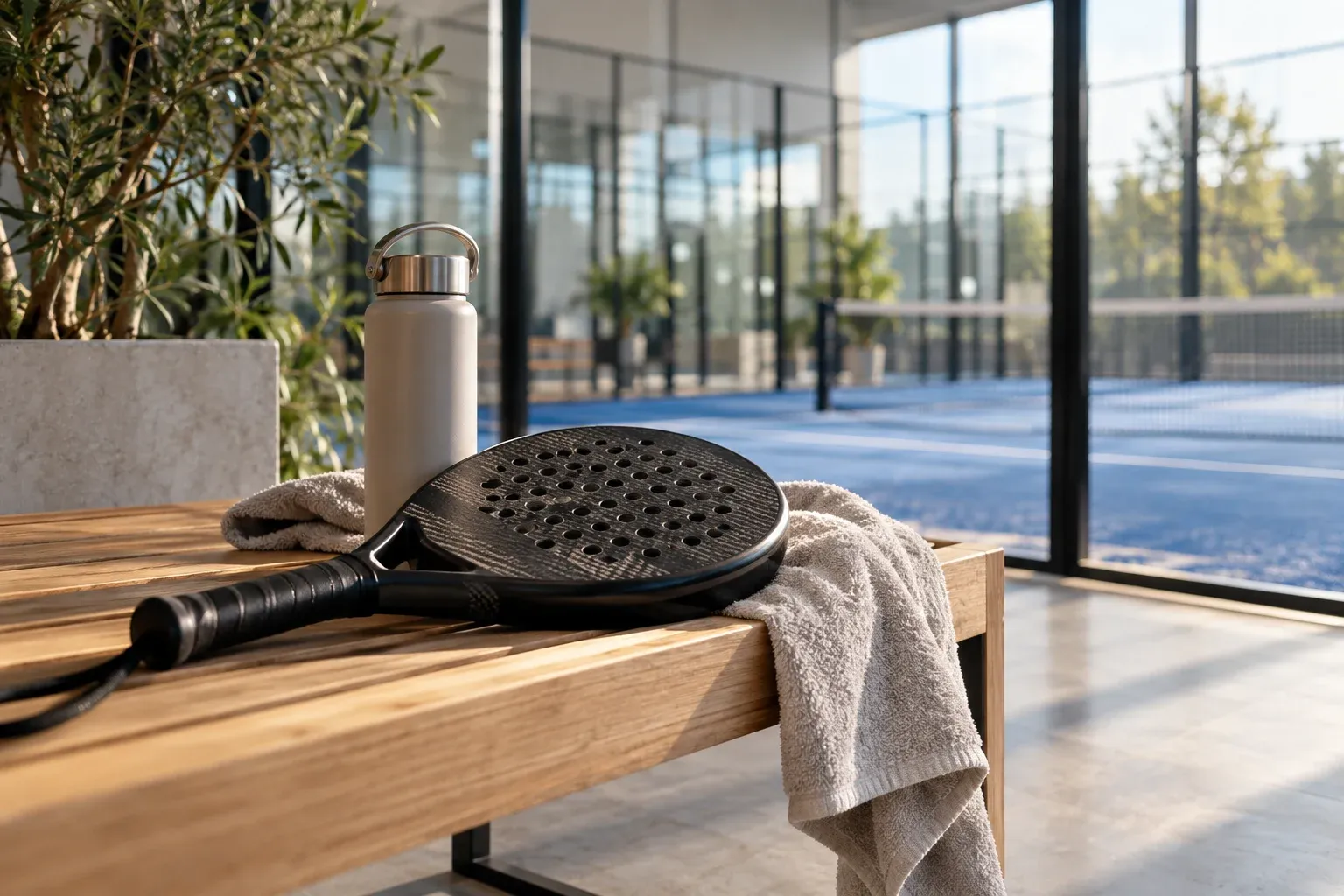
Your Swedish contract mentions friskvårdsbidrag and colleagues talk about spending theirs on padel. Here is where the allowance comes from, the one number that matters, what it can and can’t pay for, and how to claim it as a newcomer.
When you need this
You’ve just started a job in Sweden and HR mentions a wellness allowance. You want to know whether padel, yoga, riding lessons or a massage can go on it. You’re new, you don’t have a personnummer yet, and you wonder whether you can claim at all. Or a colleague insists golf is banned, or that the limit is higher than you were told.
Where the allowance comes from
Friskvårdsbidrag (literally “wellness contribution”) is not a law that gives you money. It is a tax rule that lets employers give you money for exercise without either side paying tax on it.
Sweden’s income-tax act says that staff-welfare benefits (personalvårdsförmåner) of minor value are not taxed, and it names “simpler kinds of exercise and other wellness” as one of them. The act sets no amount. The number everyone uses comes from Skatteverket, the Swedish Tax Agency, which has decided that an allowance of at most 5,000 kr including VAT per employee and year counts as minor value.
| Layer | Who sets it | What it says |
|---|---|---|
| Statute | Riksdag (Income Tax Act, ch. 11) | Minor-value staff benefits, including simple exercise, are tax-free if offered to the whole staff |
| Limit | Skatteverket | At most 5,000 kr including VAT per employee and year |
| Boundaries | Court rulings | Golf (2018), horse driving and shooting (2020) can qualify |
| Your amount | Your employer | Anything from nothing up to the limit |
Nothing obliges an employer to offer it. The employer decides whether there is an allowance and how large it is, and many offer less than the maximum. One Swedish university, for example, pays up to 2,500 kr, pro-rated by month of employment.
The 5,000 kr limit and the cliff edge
The limit is per employee per year, across all your claims combined, not per activity. The important detail is what happens above it: if an employer pays out more than 5,000 kr, the whole allowance becomes taxable salary, not just the part above the line, and the employer owes social contributions on it as well.
That is why Swedish employers stop at exactly 5,000 kr or below, and why your claims are refused once you hit your amount. It also explains why unused money is usually lost on 31 December rather than carried forward: the allowance belongs to the calendar year, and the activity must be paid for in the year you claim it.
Note: The 5,000 kr figure is Skatteverket’s interpretation, not a number written into the law. It comes from the agency’s 2020 guidance, and no change had been proposed as of October 2026.
What qualifies, and what doesn’t
The test is simple to state: the activity needs an exercise element, or it must be a treatment that relaxes you or relieves stiffness and soreness. It must be of minor value, and only the activity itself is covered, never the kit.
| Usually yes | Usually no |
|---|---|
| Gym card, group classes, swimming hall | Buying or renting equipment (rackets, skis, trainers) |
| Padel, tennis, squash court fees | Membership fees in a club or association |
| Riding lessons, horse driving, golf on pay-and-play courses | Theory courses, diplomas, licences |
| Race entry fees, course fees, lift passes | Health care, medical treatment, cosmetic treatment |
| Massage, acupuncture, up to 1,000 kr per session | Gift cards bought with the allowance |
| Equipment that is part of the activity, like the ball at a bowling alley | A massage costing more than 1,000 kr per session |
Old lists are out of date. Skatteverket no longer publishes a list of approved activities, and says the rules themselves did not change when the list went. Plenty of websites still copy an older version, and the most common error in them is golf and riding.
Those used to be excluded as costly sports. Then in 2018 the Supreme Administrative Court allowed an allowance spent on golf at pay-and-play courses and a driving-range card. In 2020 it allowed a continuation course in horse driving and training in field and western shooting, holding that the “simpler kind” requirement weighs less when the benefit is paid as money. Skatteverket followed with guidance that any activity with a practical exercise element can qualify, naming agility, sport fishing and enduro as examples. Riding lessons are now one of its own examples.
Padel isn’t named on any official page, but Skatteverket’s guidance names racket sports such as tennis and squash, and padel courts are booked and paid for the same way (see padel in Sweden). Court fees qualify in practice; the racket doesn’t.
Massage counts as “other wellness” even without exercise, but only while a single session costs 1,000 kr or less. Exercise activities may cost more per occasion and still qualify.
Grey zones go to the Tax Ruling Board. In January 2026 Skatterättsnämnden treated VR training for eye coordination as tax-free “other wellness”, against Skatteverket’s view. An advance ruling binds only that case, so don’t read it as a general green light.
Finally, the employer has the last word: employees can’t demand that a specific activity be approved. If something is unusual, ask before you pay.
Who gets it, and who doesn’t
The allowance follows employment, not residence or citizenship. To stay tax-free it must be offered to the whole staff on the same terms, so a new hire from abroad gets the same as everyone else, from whenever the employer’s policy says. Employers may pro-rate it for part-timers by working time, as long as the same rule applies to everyone.
| You are | Friskvårdsbidrag? |
|---|---|
| Employed by a Swedish employer that offers it | Yes, same terms as colleagues |
| Newcomer without a personnummer yet | Yes, the receipt doesn’t need one |
| Part-time employee | Yes, possibly pro-rated by working time |
| Self-employed sole trader | No, it’s an employee benefit |
| Tourist, exchange student, remote worker paid from abroad | No Swedish employer, so no allowance |
If you’re still arranging your first weeks in a Swedish job, moving to Sweden for work covers registration, bank and tax in order.
How to claim it
- Check your employer’s policy. Find the amount, any pro-rating, the claim deadline and whether a benefits portal is used.
- Pick a qualifying activity with an exercise element, or a relaxing treatment such as massage.
- Pay the provider, or pay through the portal. With a portal you can often pay a connected gym or club straight from your balance.
- Keep the receipt. It must show what you paid for; your personnummer isn’t required.
- Submit within the calendar year. Payroll refunds you afterwards. Watch for a November deadline.
- Stay within your amount, and never above 5,000 kr from all claims combined.
A few habits help. Buying an annual gym card early in the year uses the whole allowance with one receipt (see gyms in Sweden). A card bought in one year that runs into the next is reimbursed in the year you paid. If your employer uses a portal, check whether the provider is connected before you pay yourself, since some portals won’t refund receipts from connected providers. Some employers also accept only Swedish-registered providers and activities done outside working hours.
Warning: Receipts for equipment, club memberships or gift cards are rejected. If one slips through, the payment can become a taxable benefit.
Employers may also pay directly for a simple activity for all staff, such as a workplace gym or office massage, with no fixed amount, and combine that with the allowance as long as the total stays of minor value. A separate employer bike benefit, offered to all permanent staff, is taxed only above 3,000 kr a year.
For how Swedish taxes and benefits fit together more broadly, see why Swedes pay high taxes.
Practical information
| Item | What to know | Checked |
|---|---|---|
| Tax-free ceiling per employee and year | 5,000 kr including VAT (Skatteverket guidance) | 2026-10-14 |
| Above the ceiling | The whole allowance is taxed, plus employer contributions | 2026-10-14 |
| Activities without exercise (e.g. massage) | At most 1,000 kr per session | 2026-10-14 |
| What employers offer | Varies; one university pays up to 2,500 kr, pro-rated by month | 2026-10-14 |
| Carry-over | Calendar year; most employer policies don’t carry unused money forward | 2026-10-14 |
| Personnummer on the receipt | Not required | 2026-10-14 |
FAQ
What is friskvårdsbidrag?
It is a wellness allowance that Swedish employers may offer all their staff to spend on exercise or relaxing treatments such as massage. You pay the gym, club or therapist and the employer refunds you against a receipt, or you pay from a portal balance. Kept within Skatteverket’s limits it is tax-free for you and free of employer contributions.
How much is the tax-free wellness allowance in 2026?
Skatteverket accepts at most 5,000 kr including VAT per employee and year as tax-free. Your employer may offer less, and many do. If it pays more than 5,000 kr, the whole allowance becomes taxable salary, not just the excess. The figure comes from Skatteverket’s 2020 guidance, and no change had been proposed as of October 2026.
Can I use friskvårdsbidrag for padel, golf or riding?
Yes, in principle. Court rulings in 2018 and 2020 brought golf, horse driving and shooting within the allowance, and Skatteverket names riding lessons and racket sports as qualifying. The activity must have an exercise element. Court fees and lessons count; buying or renting rackets, clubs or other equipment does not. Your employer still decides what it approves.
Does massage count for friskvårdsbidrag?
Yes. Treatments that relax you or relieve stiffness and soreness, such as massage, count as wellness even without exercise. The condition is that a single session costs no more than 1,000 kr; above that it is no longer of minor value. Health care, medical treatment and cosmetic treatments are excluded, so a physiotherapist’s care visit is a different matter.
Can I get friskvårdsbidrag as a newcomer or foreigner in Sweden?
Yes, if you are employed by an employer that offers it, since it must go to the whole staff on the same terms. Residence and citizenship don’t matter, and the receipt doesn’t need a personnummer. Tourists, exchange students and remote workers paid by a foreign company have no Swedish employer, so the allowance doesn’t apply to them.
Is there an official list of approved activities?
No longer. Skatteverket has stopped publishing a list and says the rules themselves have not changed. Instead you test each activity: an exercise element, or relaxation and relief of stiffness, at minor value, offered to all staff. Older lists online may be wrong, especially where they exclude golf or riding. Employers can approve or refuse specific activities.
Related guides
- Gyms in Sweden — the most common thing the allowance pays for, and how memberships work
- Padel in Sweden — booking courts, the sport colleagues spend their allowance on
- Swedish work culture — where friskvård sits among fika breaks and five o’clock finishes
- Moving to Sweden for work — your first month as a new employee, step by step
- Filing a Swedish tax return as a newcomer — where taxable benefits show up on your return
Facts verified 2026-10-14. Sources: Sveriges riksdag (Inkomstskattelag 1999:1229), Skatteverket, Högsta förvaltningsdomstolen, Skatterättsnämnden via FAR Online, and Linköpings universitet as an employer example — full register in this topic’s source file. This is general information, not tax advice. Found something outdated? Tell us and we’ll fix it.