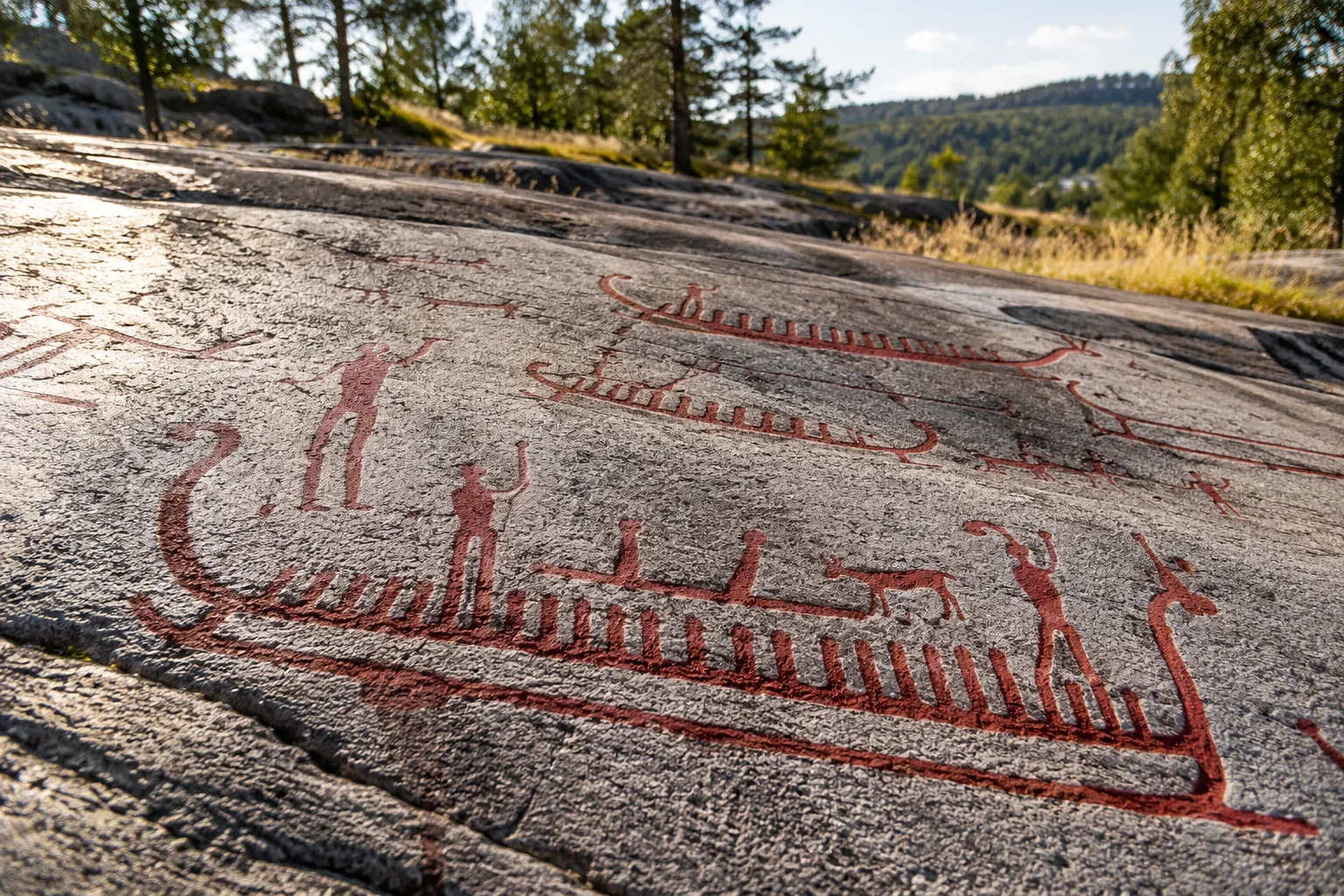
Sweden’s fifteen World Heritage Sites run from Bronze Age rock carvings on the west coast to a Sámi mountain landscape above the Arctic Circle. Here is each one with what you will see, how to get there, when it is open and what it costs.
When you need this
You are planning a trip around Sweden’s UNESCO sites, or adding them to a Nordic list. You want to know which sites are worth a detour from your route, and which you can reach without a car. Or you are travelling outside summer and need to know what is still open, because several sites close or cut back from autumn to spring.
All 15 at a glance
The count is 15: 13 cultural sites, one natural (the High Coast, shared with Finland’s Kvarken Archipelago) and one mixed (Laponia). The Struve Geodetic Arc is shared with nine other countries.
Fresh as of October 2026: the World Heritage Committee met in Paris in 2025 and in Busan, South Korea, in July 2026. It added 26 and then 25 new sites worldwide, but none in Sweden. Lists showing 14 are older than the Hälsingland farms (2012), which are still Sweden’s newest entry. The Swedish government has said it prefers restraint with new nominations, and the country’s Tentative List holds a single candidate, The Rise of Systematic Biology.
| # | Site | Year | Getting there | Season | Our guide |
|---|---|---|---|---|---|
| 1 | Drottningholm | 1991 | Metro to Brommaplan + bus, or summer boat | Park 24/7; palace weekends only from October | Drottningholm Palace |
| 2 | Birka and Hovgården | 1993 | Boat only to Birka (about 2 h from City Hall) | Boats May–October | Birka |
| 3 | Engelsberg Ironworks | 1993 | Car or regional train to Ängelsberg | Tours on set summer dates | — |
| 4 | Rock Carvings in Tanum | 1994 | Train to Tanumshede (5 km; line closed until 12 Dec 2026, replacement bus) or bus to Hoghem (500 m) | Carvings 24/7 all year | Bohuslän |
| 5 | Skogskyrkogården | 1994 | Green metro line, 15 min | Grounds 24/7; visitor centre May–October | Free museums in Stockholm |
| 6 | Visby | 1995 | Ferry from Nynäshamn or Oskarshamn, about 3 h | A town: always there | Gotland and Visby |
| 7 | Laponia | 1996 | Road 827 west; bus Gällivare/Jokkmokk–Ritsem | Naturum April–September | Swedish Lapland |
| 8 | Gammelstad | 1996 | Bus 9 from Luleå | Area always open | Luleå |
| 9 | Karlskrona | 1998 | Town on foot; fort by guided boat | Fort tours in summer, ID needed | Karlskrona |
| 10 | South Öland | 2000 | Öland Bridge by car or bus | Open land all year | Öland |
| 11 | High Coast | 2000/2006 | Car recommended | Naturum March–November | The High Coast |
| 12 | Falun | 2001 | Train to Falun; mine 1 km away | Mine all year; museum winter weekends | Dalarna |
| 13 | Grimeton | 2004 | Via Varberg | February–October | Halland coast and Varberg |
| 14 | Struve Geodetic Arc | 2005 | Car; short walks | Mainly summer | — |
| 15 | Hälsingland farms | 2012 | Car; farms spread across rural Hälsingland | Mostly summer | — |
What you actually see
“World Heritage” covers very different things in Sweden: a royal palace, a cemetery, a radio station, a survey marker on a hill. Most are towns, landscapes or open sites you can walk into for free; any fee is for a museum, tour or boat beside them.
- Drottningholm — Sweden’s first entry: the palace, its court theatre from the 1760s, the Chinese Pavilion and the gardens. The King and Queen live there.
- Birka and Hovgården — a Viking Age trading town founded in the 700s, about 700 people at its height, and the royal estate on Adelsö across the water.
- Engelsberg — an ironworks founded in 1681, the only Swedish works that keeps both its buildings and most of its machinery.
- Tanum — more than 350 groups of Bronze Age carvings of ships, animals, weapons and people.
- Skogskyrkogården — the Woodland Cemetery (1919–1940) by Gunnar Asplund and Sigurd Lewerentz, chapels in a pine forest that shaped cemetery design worldwide.
- Visby — a walled Hanseatic town; its ring wall, probably begun around 1250, is northern Europe’s oldest preserved town wall.
- Laponia — 9,400 km² of mountains, glaciers, wetlands and old forest in four national parks and two reserves, listed for both nature and Sámi reindeer herding.
- Gammelstad — Sweden’s largest church town: 405 cottages around a 1400s stone church.
- Karlskrona — a naval town founded in 1680, the best-preserved planned naval base of its era in Europe, still used by the navy.
- South Öland — farmland and the limestone plain Stora alvaret, grazed for a couple of thousand years.
- The High Coast — land that has risen 286 m since the ice melted, the greatest total uplift known.
- Falun — the copper mine that produced two-thirds of the world’s copper in the mid-1600s, with its town.
- Grimeton — a 1920s long-wave station with six 127 m masts and the world’s only working Alexanderson alternator.
- The Struve Arc — four Swedish points of a survey chain (1816–1851) that measured the shape of the Earth; 34 points in ten countries are protected.
- The Hälsingland farms — seven 19th-century farmhouses with rooms painted for festivities.
Around Stockholm: four sites without a car
Stockholm is the best base. Skogskyrkogården is 15 minutes from T-Centralen on the green line toward Farsta strand; the main entrance is open around the clock, and the visitor centre at Kapellslingan runs from May to September daily and on October weekends. Public guided tours run on Sundays in season. It is a working cemetery, so keep your voice down near the chapels.
Drottningholm is a metro ride to Brommaplan and a bus, or a summer boat from City Hall. The palace park is free and never closes, even on the many days the palace itself is shut. Birka is boat-only, about two hours from City Hall, from 7 May to 25 October in 2026; from November to April there is no regular boat. Hovgården, Birka’s royal half on Adelsö, is reachable by road and a free car ferry.
Engelsberg Ironworks in Ängelsberg, Västmanland, can be reached by regional train on the Västerås–Ludvika line; check in Resrobot that your train stops at Ängelsberg (our car-free travel guide explains how). Guided tours run on set dates in summer, and the smithy is open only on a tour. Outside tours you may walk the grounds and see the blast furnace from outside, but much of the area is private. For 2026 the regular tours have ended; they return in May 2027.
The south and west: carvings, a naval town and a radio station
Tanum’s rock carvings are free and open day and night all year. take the train to Tanumshede, 5 km away (the line is closed until 12 December 2026; a replacement bus runs), or a bus to the Hoghem stop, 500 m from Vitlycke museum. The museum is seasonal; it is free for anyone under 20, and in high summer the adult ticket includes a guided tour.
Karlskrona’s town centre and waterfront are yours to walk. Marinmuseum is free for under-18s, and for everyone on Wednesdays from October to April; adults pay otherwise. Guided tours of the old naval shipyard are cancelled until further notice for security reasons, so ignore older guides that offer them. Kungsholms fort is a different matter (see below).
Grimeton Radio Station near Varberg opens from February to October, daily in high summer and on fewer days in spring and autumn, with a ticket. On Alexanderson Day (5 July in 2026) the 1920s alternator is started up and transmits at 11:00 and 15:00; those transmissions need a special ticket with limited seats.
South Öland is open land, free all year. You cross the Öland Bridge from Kalmar by car or bus; walking and cycling on it are banned. Visby on Gotland is about three hours by ferry from Nynäshamn or Oskarshamn — see our Gotland ferry guide.
The north: long distances, mostly by car
Gammelstad is the easy one: bus 9 from Luleå, about 10 km. Walking the church town is free, and the visitor centre opens every day for most of the year. Falun’s copper mine is about 1 km from the station and open all year, though the museum opens only at weekends in winter.
The High Coast is best by car: buses reach the larger towns. Naturum Höga Kusten at Skuleberget opens from March to November.
Laponia begins at naturum Laponia, a free visitor centre about 300 m off road 827 in Stora Sjöfallet National Park. In 2026 it opened from April to September, every day from mid-June to the end of August. A bus runs west from Gällivare and Jokkmokk to Ritsem and stops at Stora Sjöfallet.
The Struve Arc in Sweden is four hilltops in Tornedalen, mainly visited in summer:
| Point | Where | Access |
|---|---|---|
| Tynnyrilaki | Kiruna municipality | — |
| Jupukka | About 10 km northwest of Pajala | Steep, marked 600 m forest path; bench, shelter and grill near the top |
| Pullinki | Övertorneå | Next to a ski area that runs in winter |
| Perävaara | About 25 km northwest of Haparanda, near Karungi | 400 m walk; the only cross surviving from the survey work |
Sites that need planning ahead
Kungsholms fort, Karlskrona. The fort is a military protected object, so you can only visit on a guided boat tour from Fisktorget, run daily from 22 June to 16 August in 2026. Book through Karlskrona’s tourist centre by 15:00 two working days ahead, giving your name, nationality and passport number. Everyone over 18 must bring valid ID; visitors from outside Scandinavia need the passport they booked with.
The Hälsingland farms. Only some are walk-in:
| Farm | Village | How to visit |
|---|---|---|
| Gästgivars | Vallsta | Open in summer; visitor centre, café, shop |
| Erik-Anders | Asta | Open in summer; hotel, café, shop |
| Bommars | Letsbo | Guided tours in summer, every visit booked ahead |
| Bortom Åa | Fågelsjö | Can be shown all year |
| Kristofers | Järvsö | Summer, pre-booked only; still a working farm |
| Pallars | Långhed | Summer, pre-booked only |
| Jon-Lars | Långhed | Summer, pre-booked only |
Rules on site
Being on the World Heritage List does not add a separate set of visitor rules. What binds you is the ordinary protection of each place:
- Ancient monuments — Tanum’s carvings, Birka’s graves, Visby’s ring wall, the Struve markers — may not be moved, dug, covered or damaged. Never walk on or chalk a rock carving; damaging an ancient monument (fornlämning) is an offence.
- National parks in Laponia each have their own regulations, which can differ from the right of public access. Western Laponia generally does not allow dogs, except on Kungsleden.
- Private and military land — at Engelsberg, the Hälsingland farms and Kungsholms fort — follows the owner’s rules.
Practical information
| Question | Answer |
|---|---|
| How many sites | 15 (13 cultural, 1 natural, 1 mixed); none added in 2025 or 2026 |
| Free to visit | Tanum’s carvings, Gammelstad, Drottningholm’s park, south Öland, Skogskyrkogården’s grounds, naturum Laponia |
| Paid | Museums, tours and boats: Vitlycke, Marinmuseum, Grimeton, Engelsberg, Falu Gruva, Drottningholm Palace, the Birka boat, the Kungsholms fort tour |
| Free for children | Vitlycke museum under 20; Marinmuseum under 18 (and for everyone on Wednesdays, October–April) |
| Car-free from Stockholm | Skogskyrkogården, Drottningholm, Birka; Engelsberg by regional train |
| Need a car | Laponia, the Struve points, the Hälsingland farms, the High Coast |
| Book ahead | Kungsholms fort (2 working days, passport); Hälsingland farms by appointment; Engelsberg tours |
| Closed or reduced in winter | Birka boat (Nov–Apr), Grimeton (Nov–Jan), naturum Laponia (Oct–Mar), Engelsberg tours |
Seasons checked 2026-10-01 against each operator. Ticket prices change every year and are not listed here: check the operator’s own page before you go.
FAQ
How many UNESCO World Heritage Sites does Sweden have?
Fifteen: 13 cultural, one natural and one mixed. The natural one is the High Coast, shared with Finland’s Kvarken Archipelago, and the mixed one is Laponia in Swedish Lapland. The Struve Geodetic Arc is shared with nine other countries. No Swedish site was added at the 2025 or 2026 committee sessions, so a list showing another number is out of date.
Which Swedish World Heritage Sites can I visit from Stockholm without a car?
Three are easy day trips. Skogskyrkogården is 15 minutes from T-Centralen on the green metro line. Drottningholm is a metro and bus ride away, or a seasonal boat trip. Birka is about two hours by boat from City Hall between May and October. Engelsberg Ironworks is also possible by regional train via Västerås to Ängelsberg.
Are Sweden’s World Heritage Sites free to visit?
Many are. Tanum’s rock carvings, Gammelstad church town, Drottningholm’s palace park, south Öland’s landscape, Skogskyrkogården’s grounds and naturum Laponia cost nothing. You pay for the museums, tours and boats beside them, such as Vitlycke museum, Marinmuseum, Grimeton, Falu Gruva and the boat to Birka. Children often get in free at the museums.
When is the best time to visit Swedish World Heritage Sites?
Late June to mid-August, when every site, tour and boat runs daily. May and September still work for most. From November to April, Birka has no regular boat, and Grimeton and naturum Laponia are closed; Engelsberg’s tours stop after summer. The open sites, such as Tanum’s carvings, Gammelstad and Visby’s walls, can be visited all year.
What is the newest World Heritage Site in Sweden?
The Decorated Farmhouses of Hälsingland, inscribed in 2012: seven 19th-century farms whose rich farmers built rooms painted for festivities. Sweden’s government favours restraint with new nominations, and its Tentative List holds only one entry, The Rise of Systematic Biology. A 2025 proposal for Värmland’s Forest Finn farms was not added to it.
Can I visit Kungsholms fort in Karlskrona?
Yes, but only on a guided boat tour from Fisktorget, run daily in high summer. The fort is a military protected object, so you book through Karlskrona’s tourist centre by 15:00 two working days ahead, giving your name, nationality and passport number. Everyone over 18 must bring valid ID, and visitors from outside Scandinavia the passport they booked with.
Where is the Struve Geodetic Arc in Sweden?
On four hilltops in Tornedalen, Norrbotten: Tynnyrilaki in Kiruna municipality, Jupukka near Pajala, Pullinki in Övertorneå and Perävaara near Haparanda. They are points from a 19th-century survey chain that measured the shape of the Earth. Jupukka and Perävaara are short walks from parking, best in summer, and Perävaara keeps a cross carved during the survey.
Related guides
- Drottningholm Palace — which days the palace opens and whether to take the boat or the bus.
- Birka: Sweden’s Viking Age trading town — the boat season and what is left to see on Björkö.
- Swedish Lapland — Laponia, Gammelstad and the Struve points on one northern trip.
- The High Coast — how to see the uplift coast with or without a car.
- Sweden without a car — planning the car-free sites in Resrobot.
Facts verified 2026-10-01. Sources: UNESCO World Heritage Centre, Riksantikvarieämbetet, Länsstyrelsen Norrbotten, Region Gävleborg, Laponiatjuottjudus and the site managers’ own pages — full register in this topic’s source file. Found something outdated? Tell us and we’ll fix it.