Swedish calendars and café boards give whole days to a single bun, cake or dish. Here is every food day worth knowing, sorted into real old customs and modern promotions, with who started each one and what it means for your plans.
When you need this
It’s early October, March or November and every café board in town is pushing the same item. You’ve spotted “Kanelbullens dag” or “Våffeldagen” in a Swedish calendar and want to know whether anything closes. Or you want to time a trip so you can eat semlor or saffron buns in season, and need to know which day is the peak.
The calendar at a glance
Swedish food days come in two kinds. The old ones grew out of the church year and folk custom. The new ones are temadagar, theme days, started by an industry body or simply by social media.
| Date | Day | Food | Kind |
|---|---|---|---|
| Tuesday 47 days before Easter (9 Feb 2027) | Fettisdagen | semla | church year |
| 25 March | Våffeldagen | waffles | church year, dialect pun |
| 11 May | Chokladbollens dag | chocolate ball | theme day, origin undocumented |
| Early August | Crayfish season | crayfish | former legal premiere |
| Third Thursday in August (19 Aug 2027) | Surströmmingspremiär | fermented herring | former legal date |
| 4 October | Kanelbullens dag | cinnamon bun | industry theme day, 1999 |
| 6 November | Gustav Adolfsdagen | Gustav Adolf pastry | flag day; bakery custom |
| 7 November | Kladdkakans dag | sticky chocolate cake | social-media theme day |
| 10 November | Mårtensafton | roast goose, black soup | folk custom, south |
| 13 December | Lucia | lussekatt (saffron bun) | church year and folk custom |
The practical use is simple. The day tells you what every bakery and supermarket will be featuring that week, and for the seasonal foods, semlor and saffron buns, it marks the peak or the end of a short sales window.
The old days: church year and folk custom
Fettisdagen (Shrove Tuesday) is semla day. It is always the Tuesday 47 days before Easter Sunday, so it moves between 3 February and 9 March; in 2027 it is 9 February. Bakeries sell semlor, cream-and-almond-paste buns, for weeks beforehand, and on the day itself Swedes eat more than five million of them. In much of southern Sweden the bun is called a fastlagsbulle. The semla guide covers the season in detail.
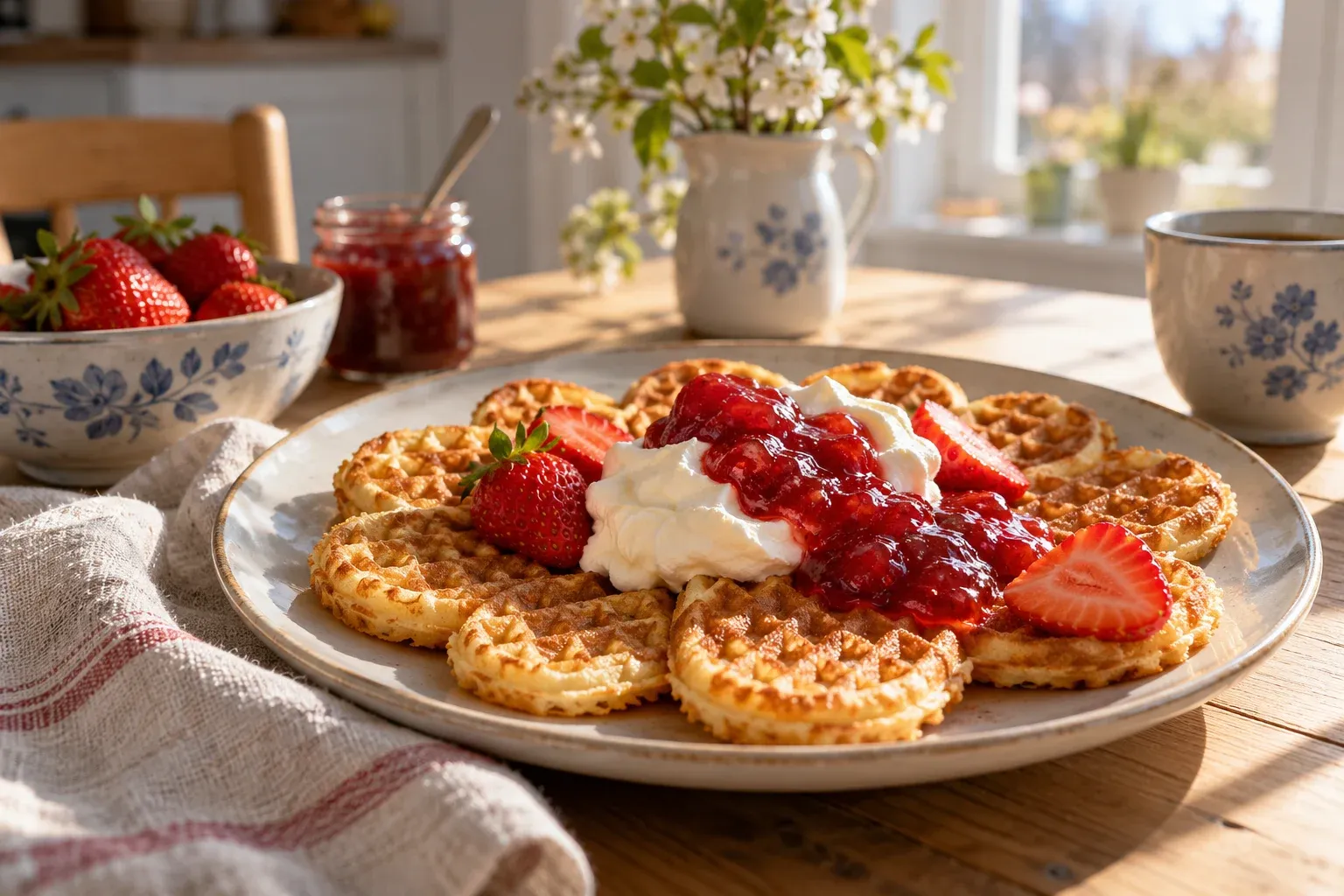
Våffeldagen (Waffle Day) on 25 March is the best story in the calendar. The date is the Annunciation, once called vårfrudagen, Our Lady’s Day. In some central Swedish dialects that sounded like vafferdagen, close to vaffla, waffle, and people started eating waffles on the day. The custom goes back at least to the 1800s. After the 1952 calendar reform the church moved its feast to the nearest Sunday, but the waffles stayed on 25 March. In 2027 Våffeldagen is a Thursday; jam and whipped cream are the usual toppings.
Lucia on 13 December brings the lussekatt, a wheat bun usually but not always flavored with saffron, tied to Advent, Lucia and Christmas. See Lucia in Sweden for concerts and processions.
Gustav Adolfsdagen, 6 November, marks the death of King Gustav II Adolf in 1632. Bakeries sell a pastry topped with the king’s silhouette. It comes in many local versions, despite a 2003 attempt to standardise it; chocolate is most common in Uppsala and Stockholm. Gothenburg, which counts the king as its founder, has extra reason to celebrate.
Mårtensafton, 10 November, is goose night, covered below under regional days.
Two seasonal “premieres” were once fixed by law. The surströmming premiere on the third Thursday in August was statutory from 1940 to 1988; producers keep the date themselves today (19 August in 2027). The crayfish premiere was tied to a fishing ban that lasted until 1994, and most Swedes still start eating crayfish in early August. The surströmming guide and the Swedish crayfish party guide take it from there.
The new days: theme days and promotions
Kanelbullens dag, Cinnamon Bun Day, on 4 October, is the best known and the youngest of the big ones. Hembakningsrådet, the Home Baking Council, an organisation of flour, yeast, sugar and margarine makers, invented it in 1999 to mark its 40th anniversary. It entered the almanac in 2004. The bun itself is older and sold year-round; the day is when promotions peak. In 2027 it falls on a Monday. The Swedish cinnamon buns guide explains the bun.
Kladdkakans dag, 7 November, celebrates kladdkaka, Sweden’s sticky chocolate cake. No company or organisation stands behind it: the idea came from a conversation on social media, reportedly in 2008. In 2026 it falls on a Saturday.
Chokladbollens dag, 11 May, honors the chocolate ball from the fika counter. The date is widely repeated, but no source we checked documents who started it or when, so we don’t pretend to know.
These days set off a crowd of followers: cardamom bun, roll cake, gingerbread and more each have a claimed day. They come and go, which is why this page doesn’t try to list them all.
| Old days | New theme days | |
|---|---|---|
| Origin | Church year, folk custom | Industry body or social media |
| Age | Centuries | Since 1999 |
| Examples | Fettisdagen, Våffeldagen, Lucia | Kanelbullens dag, Kladdkakans dag |
| What it means for you | Seasonal food peaks | A week of promotions |
Who puts a day in the calendar
Not the government. Isof, the state institute for language and folklore, explains that theme days can be minority holidays or initiatives from interest groups, sometimes with commercial aims. Almanac publishers decide which ones get printed, normally once a theme has general interest and several years of media attention.
So “it’s in the calendar” does not mean official. Kanelbullens dag, invented in 1999, only reached the almanac in 2004. Calling it an ancient tradition gets the history wrong by several centuries, though the bun is very much loved.
Nothing closes: food days and the law
No food day is a public holiday. None appears in the Public Holidays Act, Lag (1989:253) om allmänna helgdagar, so shops, offices, banks and transport run as on any other day. Don’t plan a day off, or a closure, around any of them.
Only one food day is in any statute at all. 6 November, Gustav Adolfsdagen, is a general flag day under the flag-day ordinance, so you’ll see flags on public flagpoles. That is about the king, not the pastry. 25 March, 4 October and 13 December are not flag days. For the days that really do close Sweden, see Swedish public holidays.
Regional days
Mårtensafton (10 November) is mainly a southern custom, celebrated above all in Skåne and Blekinge and possibly Halland. Roast goose is the dish; the black soup, svartsoppa, served before it was a mid-1800s addition from Stockholm. The Mårten Gås goose dinner guide covers it.
Gustav Adolfsdagen is strongest in Gothenburg, and the pastry varies from town to town. Surströmming is eaten about half north and half south of the Dalälven river, with its heartland on the Norrland coast.
A few planning habits help on any food day:
- Buy early. On peak days such as Shrove Tuesday and Kanelbullens dag, trays empty by late afternoon.
- Check the year’s Shrove Tuesday. It moves by up to five weeks with Easter, so last year’s date is no guide.
- Ask about allergens. Semlor, Gustav Adolf pastries and buns are full of almond paste, wheat and milk; see food allergies in Sweden.
- Treat office cake days as fun, not duty. A colleague bringing kladdkaka on 7 November doesn’t oblige you to bake.
Practical information
| Item | Detail |
|---|---|
| Public holiday on any food day | None — normal shop and office hours |
| Flag day | 6 November (Gustav Adolfsdagen) only |
| Fettisdagen 2027 | Tuesday 9 February |
| Våffeldagen 2027 | Thursday 25 March |
| Chokladbollens dag 2027 | Tuesday 11 May |
| Surströmming premiere 2027 | Thursday 19 August |
| Kanelbullens dag 2027 | Monday 4 October |
| Gustav Adolfsdagen / Kladdkakans dag 2026 | Friday 6 / Saturday 7 November |
| Mårtensafton 2026 | Tuesday 10 November |
| Lucia 2026 | Sunday 13 December |
| Cost of taking part | Free — customs, not ticketed events; bakery prices vary, check the board |
FAQ
When is Kanelbullens dag?
Kanelbullens dag, Cinnamon Bun Day, is 4 October every year; in 2027 it falls on a Monday. The Home Baking Council, an organisation of baking-ingredient makers, invented it in 1999 to mark its 40th anniversary, and it entered the almanac in 2004. It is a promotional day, not a public holiday, so shops and offices keep normal hours.
Why do Swedes eat waffles on 25 March?
Because of a sound-alike. 25 March is the Annunciation, once called vårfrudagen, Our Lady’s Day. In some central Swedish dialects that sounded like vafferdagen, close to vaffla, waffle, and people started eating waffles on the day; the custom goes back at least to the 1800s. Today it is called Våffeldagen and many Swedes still make waffles.
Are Swedish food days public holidays?
No. None of them is in the Public Holidays Act, so shops, offices, banks and public transport run as on any other day. The only one in any statute is 6 November, Gustav Adolfsdagen, and that is as a general flag day honouring the king, not as a pastry day. The food days are customs or promotions.
Who decides which food days are in the Swedish calendar?
The almanac publishers. According to Isof, the state institute for language and folklore, publishers decide which theme days are printed, normally once a theme has general interest and several years of media attention. Some days start as initiatives from interest groups, sometimes with commercial aims. Kanelbullens dag, invented in 1999, entered the almanac in 2004.
When is Kladdkakans dag?
Kladdkakans dag, the day of Sweden’s sticky chocolate cake, is 7 November; in 2026 it falls on a Saturday. No company or organisation stands behind it: the idea came from a conversation on social media, reportedly in 2008. It set off a wave of newer cake days, from roll cake to gingerbread. It is not a public holiday.
When is semla day in Sweden?
Semla day is fettisdagen, Shrove Tuesday, always the Tuesday 47 days before Easter Sunday, so it moves between 3 February and 9 March; in 2027 it is 9 February. Bakeries sell semlor for weeks before it, from around January. On the day itself Swedes eat more than five million of them, so buy early.
Related guides
- Swedish cinnamon buns — the bun behind 4 October, and what is in it
- Semla — the Shrove Tuesday bun and its short season
- Lucia in Sweden — concerts, processions and the saffron bun
- Swedish public holidays — the days that actually close Sweden
- Mårten Gås — Skåne’s November goose dinner
Facts verified 2026-10-06. Sources: Isof (Institutet för språk och folkminnen), Levande kulturarv, Sveriges riksdag (Public Holidays Act and flag-day ordinance), the Kanelbullens dag website, Dagens PS — full register in this topic’s source file. No prices or bakery recommendations are published here. Found something outdated? Tell us and we’ll fix it.