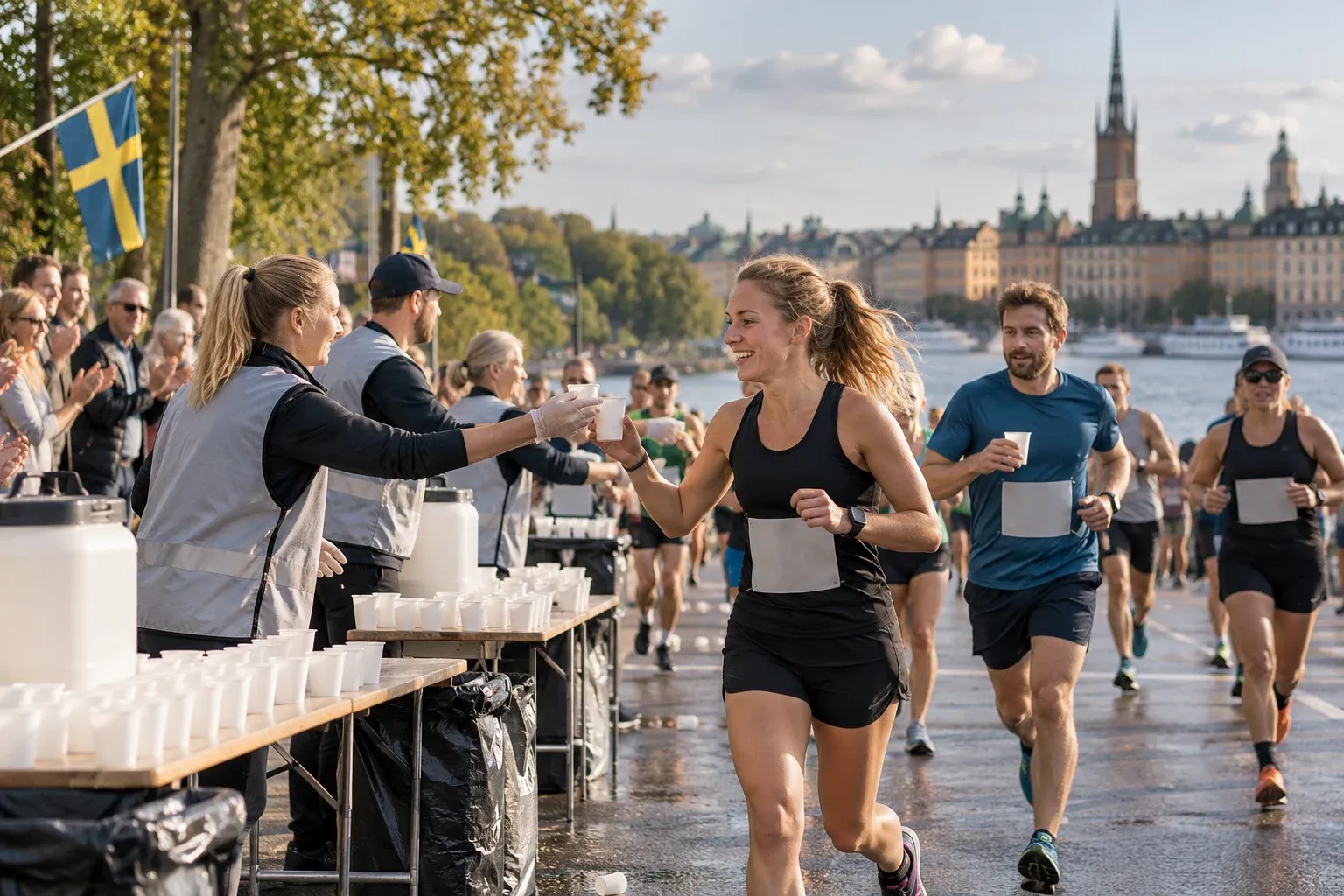
Most of Sweden’s leisure life runs through member-owned associations, from youth football to ski tracks and boat harbors. Visitors are welcome in most of them. This guide covers how the system works, the cheapest ways to take part, and the rules if you want to volunteer.
When you need this
You’re staying for a few weeks or months and want to do something with locals: a sport, a choir, a hobby. Maybe your kids want a team. Maybe a signup form has just asked for a personnummer (Swedish personal identity number) you don’t have. Or you’ve seen the words förening, årsmöte and medlemsavgift and want to know what they mean.
What a förening is
A förening is an association owned by its members. It has written bylaws (stadgar), an elected board (styrelse) and an annual general meeting (årsmöte) where members vote. Usually that means one member, one vote. Any surplus stays in the association and is never paid out to members.
Sweden has no general statute for non-profit associations. Municipal guidance puts it plainly: the bylaws are “the association’s law”, there is no law on what they must contain, and only the association itself can change them. So when you ask “can I join?”, the answer is in that club’s bylaws, not in national rules. Model bylaws open membership to anyone and make you a member once you have paid the fee.
That self-governing model runs a surprising share of what you’ll meet as a visitor:
| You’ll notice | Who usually runs it |
|---|---|
| A groomed ski track with a Swish number on a sign | A local ski club (the fee is voluntary) |
| Orange-and-white markers in the forest | A local orienteering club |
| Small boat harbors | Boat clubs — 912 of them in Svenska Båtunionen |
| Allotment gardens with tiny cottages | Allotment associations |
| An ice hole kept open all winter | A winter-bathing club |
| Vasaloppet’s drink stations | About 4,000 volunteers from local clubs |
| Mountain huts | STF, a membership association founded in 1885 |
How many Swedes are in a club
The often-quoted “75% of Swedes are members of an association” is out of date. That was Statistics Sweden’s (SCB) 2018–2019 result. In SCB’s 2023 survey, 68.5% of people aged 16 and over belonged to at least one association, about seven points lower. That figure counts trade unions and political parties along with leisure clubs.
| Measure | Figure | Year |
|---|---|---|
| Member of at least one association (age 16+) | 68.5% | 2023 |
| Same measure, earlier survey | 75.3% | 2018–2019 |
| Member of a sports or outdoor club | 27.8% | 2023 |
| Member of a culture, music, dance or theater association | 9.0% | 2023 |
| Did unpaid voluntary work during the year | about 52% | 2024 |
| Non-profit associations in Sweden | about 163,900 | 2023 |
The sports movement alone reports about 3.1 million memberships in about 18,000 clubs. People can belong to several clubs, so that is memberships, not people. All this goes back to the 19th-century popular movements (folkrörelser), and it is why club life, is where many Swedes make friends as adults.
How to join as a visitor
Most visitors never need a full membership. Annual fees are set by each club’s annual meeting and are rarely refunded, so a few weeks of activity can cost you a year’s fee. Work down this ladder instead:
- Free activities run by clubs, such as Hittaut orienteering.
- Single sessions sold to non-members, such as a Friskis&Svettis single ticket or a motionsorientering (easy orienteering event).
- A taster — ask for prova på (try it out) or a beginners’ (nybörjare) session.
- Membership — if you’re staying for a season, pay the medlemsavgift (membership fee) and read the bylaws first.
A formal tip: an årsmöte is a real meeting with an agenda, votes and minutes, not a party. The social events are separate. If you’re staying longer, aim for September or January, when most clubs, choirs and study circles start new terms.
The personnummer question
Sports clubs keep their member and attendance registers in IdrottOnline, the national system run by the Swedish Sports Confederation (RF). Enter a full personnummer and it pulls data from the population register. Clubs also get state activity grants (LOK-stöd) based on registered attendance for participants aged 6–25 (six-year-olds were added from autumn 2025).
That is why the form asks. It’s an admin need, not a legal condition for joining. The same system lets the club add people with an incomplete or foreign identity number, so just say you’re a visitor. For the wider story of why every Swedish form wants this number, see why every form asks for a personnummer.
Orienteering, gyms and other easy ways in
Orienteering is the most Swedish way in, and the cheapest. Hittaut (Find out) is free: local clubs hide checkpoints around 96 towns, and you find them with an app, usually from May to October, with some towns running a December edition. The next step is a motionsorientering, held in more than 200 towns according to the Swedish Orienteering Federation. You register on site, pick a course by difficulty and pay in cash or often by Swish, and an instructor answers questions before the start. Competitive races are entered through the federation’s Eventor system.
Gyms: Friskis&Svettis is an association model. To buy a training card you must join the local association, but a single-visit ticket needs no membership. Cards belong to one local association, and members pay a reduced price at others. See Friskis&Svettis single tickets and Swedish gyms.
Outdoors and water: many local ski tracks are groomed by clubs, and a sign with a Swish number means a voluntary track fee. See club-groomed ski tracks. Winter-bathing clubs (vinterbadsklubbar) keep ice holes open, and in Helsingborg an association runs a public bath house for the city. See winter-bathing clubs. Allotment and boat clubs have limited plots and berths, and each association runs its own process. See allotment gardens.
Huts: STF is a membership association, but non-members can still stay at its huts by paying a surcharge. See STF, Sweden’s best-known membership association.
Study circles
A studieförbund is a state-funded adult-education association. Its basic format is the studiecirkel: a small group that learns together, with a leader, where participants shape the content. Folkbildningsrådet, which distributes the state grant, lists eight state-funded study associations in 2026: ABF, Folkuniversitetet, Medborgarskolan, NBV, Sensus, Studiefrämjandet, Bilda and Studieförbundet Vuxenskolan. Older sources say ten. For a visitor staying longer, a circle is a good way to practice Swedish, play music or learn a craft.
Volunteering in Sweden
About half of Swedes volunteer in a year. The share is higher in rural areas and smaller towns than in Stockholm, Gothenburg and Malmö, and rural volunteering is mostly in sports and leisure organizations. Big events are usually staffed by clubs rather than individuals. Vasaloppet, itself a non-profit owned by two sports clubs, gets about 4,000 functionaries from associations along the course. If you want to help at a race, ask a local club whether you can join their shift.
To find a role yourself, Volontärbyrån matches people with non-profit organizations across Sweden and has an English section.
The immigration line. The Swedish Migration Agency (Migrationsverket) says unpaid voluntary work usually needs no work permit. Its examples are programs or exchanges at training centers, community farms, religious non-profits and parishes. Volunteering for more than 90 days requires a visitor’s residence permit, which must be granted before you travel and lasts at most one year. A paid role is work, not volunteering, and the work-permit rules apply.
Practical information
| Item | What to know |
|---|---|
| Hittaut orienteering | Free; 96 towns; app; usually May–October |
| Motionsorientering | Register on site; cash or often Swish; fee set by the club |
| Annual club membership | Set by each club’s annual meeting — not published here; ask the club |
| Friskis&Svettis single ticket | No association membership needed; price set per association |
| Volontärbyrån | Free; national listings with an English section |
| Volunteering over 90 days | Visitor’s residence permit needed before travel; fee set by Migrationsverket |
| Club registration | Foreign or incomplete ID numbers can be registered in IdrottOnline |
FAQ
Can a tourist join a Swedish club or association?
Usually yes. Most Swedish associations are open to anyone who pays the annual membership fee; the club’s own bylaws decide, not national law. For a short stay, a full membership is rarely worth it: ask for a single session, guest pass or trial (prova på) first. Orienteering, Friskis&Svettis and many sports clubs offer exactly that to non-members.
Why does the club ask for my personnummer?
Because Swedish sports clubs keep their member and attendance registers in IdrottOnline, which links to the population register, and state activity grants for ages 6–25 are paid on registered attendance. It is an administrative need, not a legal entry rule. Tell them you are a visitor: the system accepts incomplete and foreign identity numbers.
How many Swedes are members of a förening?
In SCB’s 2023 living-conditions survey, 68.5% of people aged 16 and over belonged to at least one association, counting trade unions, parties, sports and culture clubs. That is about seven points lower than in 2018–2019. About 28% belonged to a sports or outdoor club. A separate 2024 study found roughly half of Swedes volunteer each year.
What is a studieförbund or studiecirkel?
A studieförbund is a state-funded adult-education association, and a studiecirkel is its basic format: a small group that learns together, led by a leader, with participants shaping the content. Folkbildningsrådet lists eight state-funded study associations, including ABF, Folkuniversitetet, Medborgarskolan, Sensus, Studiefrämjandet and Studieförbundet Vuxenskolan. Many run language, music and craft groups.
Can I volunteer in Sweden as a visitor?
Yes, within limits. The Migration Agency says unpaid voluntary work, such as programs at community farms, training centers, parishes or religious non-profits, usually needs no work permit. Volunteering for more than 90 days requires a visitor’s residence permit, granted before you travel and for at most a year. To find roles, try Volontärbyrån or ask a local club about event shifts.
How can I try orienteering in Sweden?
Start with Hittaut: free checkpoints in 96 towns, found with an app, usually from May to October and organized by local clubs. Next step is a motionsorientering, an easy event where you register on site, pick a course by difficulty and pay a small fee, often by Swish. Competitive races are entered through the federation’s Eventor system.
Related guides
- Gyms in Sweden — Friskis&Svettis single tickets and how the association gyms work
- Cross-country skiing for visitors — the club-groomed tracks and their voluntary fees
- Vasaloppet — the race run by clubs and their 4,000 volunteers
- Kolonilotter: allotment gardens — association plots and how to get one
- The personnummer explained — why club forms ask for it
Facts verified 2026-10-05. Sources: SCB, Riksidrottsförbundet, Folkbildningsrådet, Svenska Orienteringsförbundet, Migrationsverket, Vallentuna kommun, Marie Cederschiöld högskola, Friskis&Svettis, Vasaloppet, Svenska Båtunionen, Volontärbyrån — full register in this topic’s source file. Club rules and fees are each association’s own; check with the club. Found something outdated? Tell us and we’ll fix it.