In Sweden the birthday person hosts the party, the song has a fixed ending, and turning 50 can mean an open house that lasts all day. Here is what to expect as a house guest, a colleague or a parent, and what to bring.
When you need this
Someone in your Swedish host family has a birthday, and at seven in the morning the whole household is lining up outside a bedroom door with a tray. A colleague turns 50 and the invitation says öppet hus (open house). Your child brings home an invitation to a kalas (party) and you wonder who else in the class got one. Or the whole café suddenly sings the same song and finishes with four loud cheers.
A young tradition
Swedes have not always celebrated birthdays. For centuries the church put the day of baptism first, many people did not know their exact birth date, and name days were the bigger occasion. That custom has its own page: Swedish name days.
According to Isof, the state institute for language and folklore, birthday celebrations spread slowly down the social ladder:
| When | Who started celebrating birthdays |
|---|---|
| Late 1600s | Kings and queens |
| Late 1700s | The urban middle class |
| Late 1800s | Adults in the countryside; round-number birthdays begin to be marked |
| 1800s | Children in middle-class town families |
| After the Second World War | Children in rural Sweden |
Today the birthday is the main personal day of the year. Isof stresses that it is individual: the birthday person often decides how to be celebrated, and its 2023–2024 survey found great variation between families, partly because many Swedes have roots elsewhere in the world.
The birthday morning
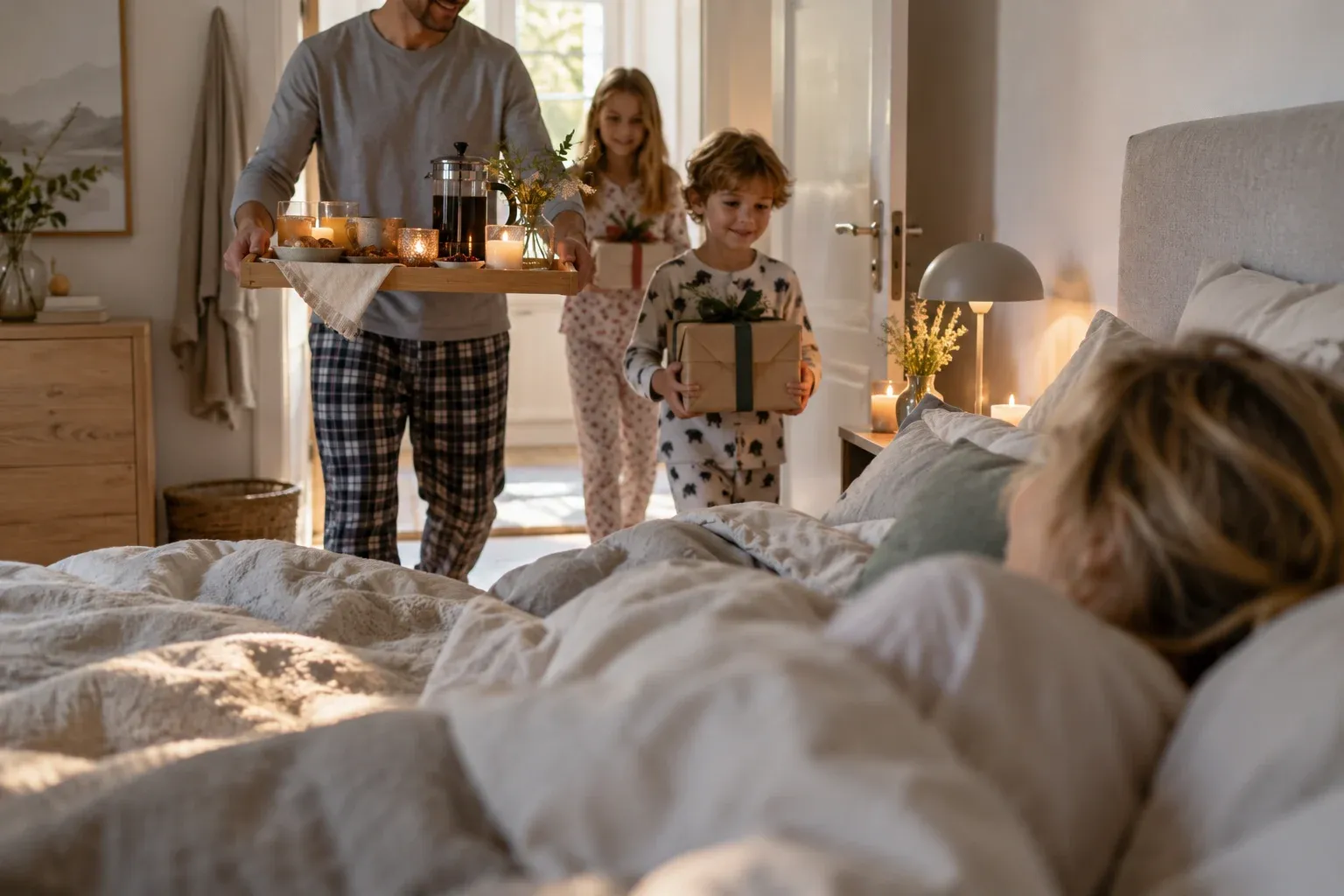
The most distinctive Swedish custom happens before breakfast. The family gathers, sometimes with a tray carrying candles, a sandwich, coffee or tea and a couple of wrapped presents, and walks into the birthday person’s bedroom singing. This is called uppvaktning, celebrating someone, and the birthday person is the födelsedagsbarn (birthday child) whatever their age.
If you are staying with a Swedish family, you may be invited to join the procession. Nobody expects a present from a house guest, but a card or flowers is a kind touch. Children are also often celebrated at preschool and school, and those born during the summer or Christmas holidays may be celebrated together when term starts again.
The song and the cheer
The song is “Ja, må han leva” (“Yes, may he live”), with hon (she) or du (you) swapped in as needed. It is traditional, its author unknown, and its melody goes back to the late 1700s; the same tune turns up in Bellman’s songs. In the 1800s it was mainly a drinking song, and it is first recorded as a birthday song around 1940. German visitors may hear echoes of “Hoch soll er leben”, and Dutch visitors the first bars of “Lang zal hij leven”.
Three things to know:
- The birthday person does not sing along. Everyone else stands and sings while they sit or lie.
- It ends with a cheer. Someone calls out a “long live” line and everyone answers with four hurra. The fourfold cheer is a Swedish habit.
- Other songs exist. Some families sing “Med en enkel tulipan” (1938), “Vi gratulerar” or “Happy Birthday”, but “Ja, må han leva” dominates at work, at school and at parties outside the family.
Then come the candles: the birthday person tries to blow them all out in one breath and keeps the wish secret, then cuts the cake and takes the first piece.
Who hosts, who pays
This is where visitors most often get it wrong. In Sweden the birthday person or their family usually sends the invitations and hosts the party. Friends sometimes throw an adult a surprise party, but the default is that you celebrate yourself and invite others.
| Situation | What usually happens |
|---|---|
| Birthday party | The birthday person or family invites and hosts |
| Restaurant dinner with friends | Do not assume the group treats the birthday person, or the reverse; ask |
| At work | In many offices the birthday person brings cake for the fika |
| As a guest | Bring a small present or flowers |
| Round birthday | Friends and colleagues often give a joint present |
Do not grab the bill for the birthday person without asking: hosting is their role, and reversing it can cause awkwardness. Parties are often moved to the nearest weekend, before or after the date, and celebrating early is normal. Some people, most often adults on a round birthday, decline all attention (undanber sig uppvaktning); respect it.
Round-number birthdays
Round numbers, jämna år, have been celebrated since the late 1800s. Isof says bigger parties are now common from 25, then at 30, 40, 50, 60, 70, 80 and 90, with 18, 65 and 75 also marked. The 50th gets extra attention: many workplaces give the person the day off, many hold an öppet hus where guests drop in during set hours, and others travel away to avoid the fuss.
An open house is not a sit-down dinner. Arrive within the stated hours, stay as long as feels right, bring a present or flowers, and expect a buffet, often including smörgåstårta (a savoury layered “sandwich cake”).
Newspapers still mark round birthdays: Dagens Nyheter’s Familj section runs “DN gratulerar” features on people turning 60, 70, 80 or 100. And when King Carl XVI Gustaf turned 80 on 30 April 2026, the celebration followed the same pattern on a national scale, with the armed forces’ traditional salute in the palace courtyard, a fly-past and choirs singing on Norrbro.
An employer may mark an even birthday from 50 with a tax-free minnesgåva (memorial gift), within a ceiling set in the Income Tax Act; cash gifts are always taxable. The figure is in the table below.
Children’s parties and school
A children’s kalas usually means cake, party games such as Hela havet stormar (a version of musical chairs) and a small present from each guest. The school is where foreign parents run into an unwritten rule:
- Invitations handed out at school are expected to go to the whole class, or all the girls, or all the boys.
- The aim is to stop children feeling left out. In 2008 the Parliamentary Ombudsman (JO) accepted that aim, but criticised a Lund school for collecting a pupil’s invitations against the child’s will, and said such rules should be clearly communicated.
- The easy way round is to send invitations privately to parents, not through school.
Ask before sending birthday sweets or cake to school. Some schools ban sweets on site, and allergies are common in every class; see food allergies in Sweden.
Cakes on the table
| Cake | What it is | When you see it |
|---|---|---|
| Prinsesstårta | Sponge, vanilla cream and whipped cream under green marzipan; first printed as “green cake” in a 1930s cookbook (1929 or 1939; sources differ) | Birthdays and celebrations, cafés |
| Smörgåstårta | Savoury layered bread “cake” with fillings, decorated like a gateau | Round birthdays and other parties when the guest count is uncertain |
| Candles in any cake | One breath, one secret wish | Every birthday |
One detail for cake lovers: the original prinsesstårta had no jam, but many modern versions add a thin raspberry layer, so you will meet both. For everyday baking, see kanelbullar.
Milestones the law cares about
| Age | What changes | Type |
|---|---|---|
| 18 | Legally adult (myndig) | Law |
| 20 | May buy alcohol at Systembolaget | Law |
| 50 and even birthdays after | An employer may give a tax-free non-cash memorial gift | Law and Skatteverket guidance |
Giving alcohol to anyone under 20 is the crime of langning, at a birthday party too; the penalty runs from a fine up to two years in prison. See Swedish alcohol age limits.
You may also notice a Swedish flag on a private flagpole on an ordinary day. Riksarkivet, the National Archives, notes that people fly the flag mostly for family celebrations such as birthdays and weddings. The royal birthdays on 30 April, 14 July and 23 December are official flag days; see Swedish flag days.
Practical information
| Item | Details |
|---|---|
| Birthday song | “Ja, må han/hon/du leva”, then four hurra; the birthday person stays silent |
| Who hosts | The birthday person or their family |
| As a guest | A small present or flowers; no standard amount |
| At work | In many offices the birthday person brings cake |
| Biggest round birthday | 50, often an open house |
| Tax-free employer minnesgåva | Up to 15,000 kronor including VAT, non-cash only, even birthdays from 50, staff employed six years or more (checked 2026-10-05) |
| School invitations | Whole class, all girls or all boys if handed out at school |
| Royal birthday flag days | 30 April, 14 July, 23 December |
| Legal milestones | 18 adult; 20 may buy alcohol at Systembolaget |
FAQ
How do Swedes celebrate birthdays?
Often from the moment the birthday person wakes up: family members come in singing “Ja, må han leva” or “Ja, må hon leva”, with presents and sometimes a breakfast tray and candles. Then come cheers, a cake later in the day and, for children, a kalas (party). Isof stresses that families vary a lot and the birthday person often decides how to celebrate.
What is the Swedish birthday song?
“Ja, må han leva” (“Yes, may he live”), with hon (she) or du (you) swapped in as needed. It is traditional, of unknown authorship, with a melody from the late 1700s, and became a birthday song around 1940. The birthday person does not sing along; others sing, then shout four “hurra”. “Happy Birthday” is common too.
Who pays for a birthday party in Sweden?
Usually the birthday person or their family, who also send the invitations, though friends sometimes throw adults a surprise party. At work the custom often runs the same way: in many offices the person with the birthday brings cake for the coffee break. As a guest you bring a small present or flowers, and for a round birthday friends often give jointly.
Why do Swedes make a big deal of turning 50?
Round-number birthdays have been celebrated since the late 1800s, and Isof names 50 as the one that gets extra attention. Many workplaces give the person the day off, many hold an open house where guests drop in all day, and others travel away. Employers may give a tax-free non-cash gift on even birthdays from 50.
Do I have to invite the whole class to my child’s party in Sweden?
Not by law, but if invitations are handed out at school, expect the school’s rule: the whole class, all the girls or all the boys. The Parliamentary Ombudsman accepted that aim in 2008 but criticised a school for confiscating cards and said such rules should be clearly communicated. Sending invitations privately to parents avoids the issue.
Is a Swedish name day the same as a birthday?
No. A name day, namnsdag, is the date the almanac links to a first name, and today it is marked with a greeting, card or cake at most. For centuries name days were celebrated more widely than birthdays, but the birthday has since become the main personal celebration in Sweden.
Related guides
- Swedish name days — the smaller celebration that once outranked the birthday.
- Swedish fika — where the office birthday cake gets eaten.
- Dinner at a Swedish home — gifts, toasts and thanks when you are the guest.
- Swedish flag days — royal birthdays and the flag on the family pole.
- Swedish alcohol age limits — why a drink for a 19-year-old at a party is a crime.
Facts verified 2026-10-05. Sources: Isof, Skatteverket, Sveriges riksdag, Riksdagens ombudsmän (JO), Riksarkivet, Sveriges Kungahus and Dagens Nyheter — full register in this topic’s source file. Found something outdated? Tell us and we’ll fix it.