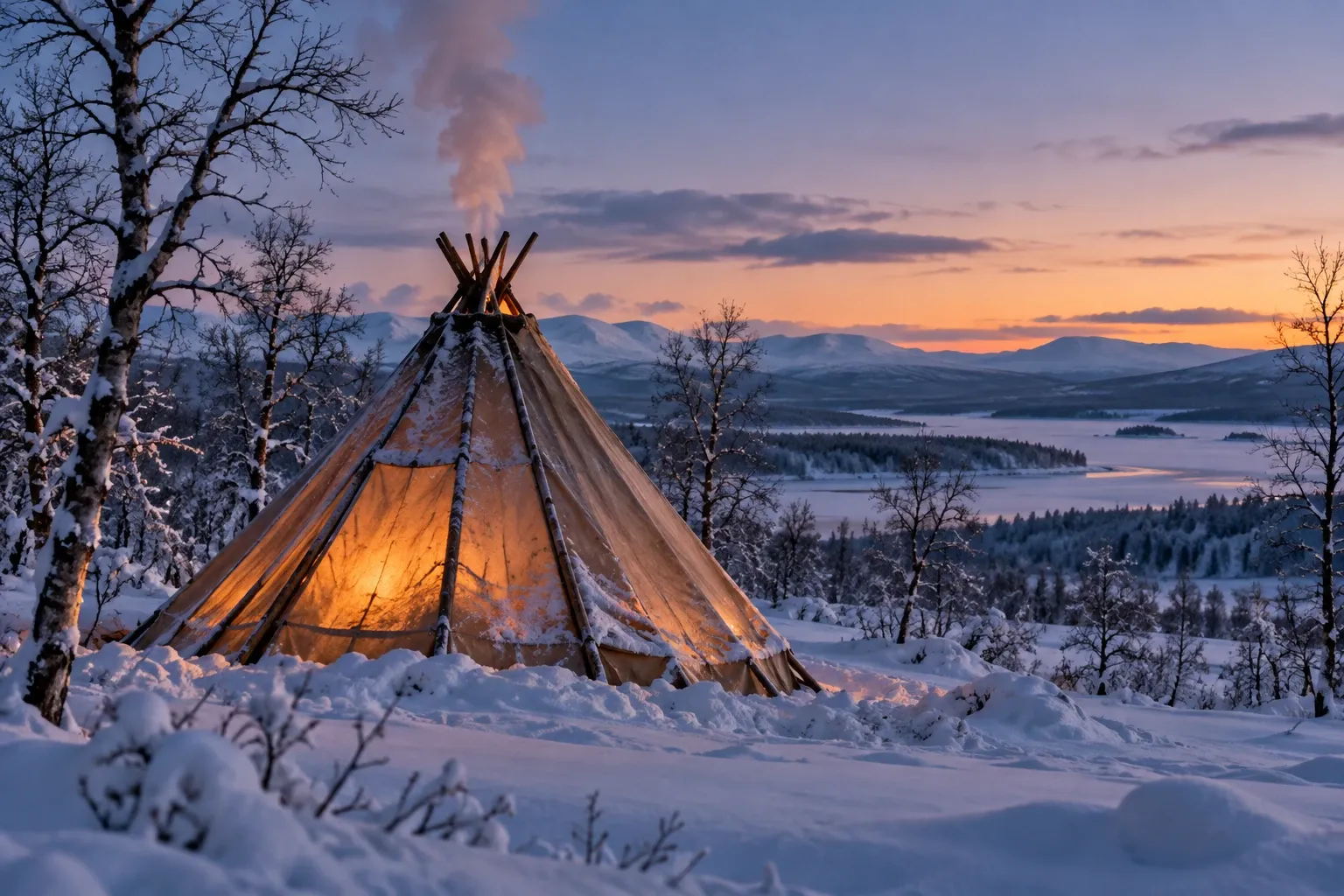
A night in a lavvu can be the most memorable part of a Lapland trip, or an expensive tepee with a Sámi theme. This guide covers what the tent is, who really runs the camps, how to stay warm and safe inside, and what your booking rights are.
When you need this
You want to sleep in a Sámi tent or hut, not just drink coffee in one for an hour. You’re comparing a Sámi-run camp with a “Lapland tepee” glamping site. Or you’ve found a package with a night, meals and a reindeer visit and want to know what happens if it’s cancelled.
What a lavvu is
A lavvu (North Sámi lávvu; Swedish kåta or tältkåta) is the Sámi tent: a cone of poles under a cloth, with the fireplace, árran, in the middle. Ájtte, the Swedish mountain and Sámi museum in Jokkmokk, describes it as an ancient type of dwelling that holds kitchen, workroom and bedroom in one. Until the 1950s it was a year-round home. Today it’s used mainly in summer, for example at calf marking in the mountains.
The floor is a layer of birch twigs for insulation, with reindeer skins on top, and you sleep on the skins. A goahti is the related hut of wood or turf; some Sámi lodges put guests in goahti huts or log cabins instead of tents.
| You’ll see | What it is | What to ask |
|---|---|---|
| Traditional lavvu | Tent, central fire, twigs and skins | Who tends the fire at night? Sleeping bags supplied? |
| Goahti or log cabin | Wooden or turf hut | Heating, toilet, electricity? |
| Glamping lavvu | Tent with bed, heater, sometimes a bathroom | Who runs it, and what is Sámi about it? |
Who actually runs a Sámi camp
One legal fact shapes the whole market. A sameby, the reindeer-herding community, may not run any economic activity other than reindeer herding. That’s in Rennäringslagen, the Reindeer Husbandry Act, section 9. So you never book a night “with the sameby”. You book with a Sámi family firm or individual, who may well be a herder in that sameby.
Sametinget’s information site says that for an activity to be called Sámi tourism it must be run under Sámi leadership, with Sámi content. It adds that most Sámi tourism businesses combine tourism with reindeer herding or other Sámi livelihoods. That’s why many camps sit next to a working herd, and why the herd’s needs come first.
How to tell a camp is Sámi-run
A tepee-shaped tent, reindeer skins and a “Lapland” name prove nothing about who owns the business. Ask three questions before you book:
- Who owns and runs the camp?
- How is the host connected to the local Sámi community or sameby?
- Which part of the stay is Sámi content, not just scenery?
A note on the quality seal. Visit Sweden, in a page last updated in January 2025, still tells visitors to look for the Sápmi Experience seal. When we checked on 15 October 2026, visitsapmi.com, the seal’s home, showed only a web host’s placeholder page, and we found no public list of holders. So a missing seal proves nothing. Asking the host directly is the test that works.
Inside the lavvu: the customs
Ájtte describes how a guest behaves in a lavvu. Sit by the entrance and wait to be invited further in. The back section, boassjo, is the kitchen area: never step into it or sit there.
Ask before photographing people. Sámi guidance from the Sámi Parliament of Finland says a person in Sámi dress who isn’t working in tourism must not be photographed without consent. It also says private persons don’t wear the dress for tourists, so don’t dress up in a borrowed or bought “Sámi costume” for photos. Our Sámi culture guide covers etiquette and handicraft labels in full.
Meals at camps often feature reindeer. Sametinget’s site singles out suovas, smoked reindeer meat, which has become a gourmet food. Remote camps cook what they brought, so tell the host about diets when you book.
Winter nights: heat, smoke and carbon monoxide
A tent is warm while the fire or stove burns, and colder once it dies down. Ask the host whether someone keeps the fire going at night, which sleeping bags and skins are supplied, and where the toilet is. Pack a warm hat and a base layer to sleep in; our guide to cold risks in Sweden has the rest.
Never bring your own camping stove, gas heater or grill into the tent. Fjällsäkerhetsrådet, Sweden’s mountain safety council, says camping stoves belong outdoors only, because of carbon monoxide and fire. The gas has no smell. The fire and smoke hole are the host’s job: don’t close vents, add fuel or move the stove unless you’ve been shown how.
| Sign of mild carbon monoxide poisoning (Läkemedelsverket) | What to do |
|---|---|
| Headache, nausea, dizziness, tiredness, a racing heart | Get into fresh air at once, then call 112 if it’s serious |
Reindeer, dogs and calving
Reindeer are someone’s livestock. Scaring, harassing or driving reindeer away in a herding area is fineable under Rennäringslagen, negligence included. Where reindeer are about, dogs not used for herding must be on a lead or shut in.
From April to June, during calving, herders want the most peace for their reindeer, so herding visits may be limited. Summer brings calf marking in the mountains, and autumn the separation and slaughter. The herding year sets the camp’s rhythm, not the other way round. For the law behind it, see reindeer herding land.
Booking: package or room only?
What you’ve bought decides your rights.
- A room or tent night alone has no statutory cooling-off right in Sweden. The host’s cancellation terms decide.
- A night plus a significant activity, such as a guided reindeer visit, put together or sold at one price, is usually a package under Paketreselagen, the Package Travel Act. The organiser is then responsible for the whole trip.
- Cancelling a package before departure can cost a reasonable fee if the contract states one. It’s free if unavoidable and extraordinary circumstances at the destination significantly affect the trip.
- A lavvu dinner without a night lasting under 24 hours is not a package.
Glamping lavvus with beds, heaters and private bathrooms exist too. There, the twig-and-skin floor is a look rather than the bed. Compare with other unusual places to stay in Sweden and with glamping in Sweden.
Fire bans in summer
Fire bans are rules about fire outdoors, issued by the county board or municipality. National guidance from MCF (formerly MSB) names camping and outdoor businesses with organised fire safety as candidates for an exemption. Only the authority that issued the ban can grant one. So whether a summer camp may light its fire during a ban is the host’s question to answer, not yours. Our guide to Swedish fire bans explains the levels.
Pitching your own lavvu
A lavvu-style tent of your own follows the ordinary camping rules of allemansrätten, the right of public access. In the mountains, Naturvårdsverket, the Swedish Environmental Protection Agency, asks you to choose the pitch with care and stay no more than a night or two. Use a stove rather than a campfire and keep your distance from reindeer. National parks and nature reserves can have stricter rules; the Laponia World Heritage area, home to seven Sámi herding communities, includes Sarek, Padjelanta, Stora Sjöfallet and Muddus.
The kåtor you pass out on the fell are not shelters. The law lets a sameby or its members put up a kåta, herder’s cabin or store on the grazing land when it’s needed for herding. Enter only if invited. See the rules for wild camping in Sweden.
Practical information
| Item | What to know |
|---|---|
| Night in a lavvu or Sámi lodge | Price varies by host, season and inclusions; ask what is included |
| Package (night + meals + reindeer activity) | Organiser responsible; cancellation fee must be reasonable |
| Room or tent night only | No statutory cooling-off right; host’s terms decide |
| Disturbing reindeer in a herding area | Fine, set by a court |
| Calving season | April–June |
| Poison advice (Giftinformationscentralen) | 010-456 6700, around the clock; emergencies 112 |
| Kiruna and Jukkasjärvi | Visit Sweden’s hub for Sámi experiences |
| Jokkmokk | Ájtte museum; winter market in early February |
FAQ
What is a lavvu?
A lavvu, or lávvu in North Sámi, is the traditional Sámi tent: poles in a cone under a cloth, with the fireplace in the middle. Inside, a layer of birch twigs insulates the floor and reindeer skins go on top. Until the 1950s it was a year-round home; today Sámi use it mainly in summer, for example at calf marking.
Is sleeping in a lavvu warm in winter?
Warm enough while the fire or stove burns, and colder once it dies down. Ask the host whether someone tends the fire at night, what sleeping bags and skins are supplied, and where the toilet is. Never bring your own camping stove or gas heater inside: in a closed tent it can cause carbon monoxide poisoning.
How do I know a Sami camp is really Sami-run?
Ask who owns and runs the business and how they are connected to the local Sámi community. Sametinget’s site says Sámi tourism must be run under Sámi leadership with Sámi content. A reindeer-herding community, a sameby, may by law run no other business, so camps are private Sámi firms. The Sápmi Experience seal could not be verified as current.
Can I sleep with reindeer herders?
Often, yes: many Sámi camps are run by herding families as a side business, and stays can include feeding or a herding visit. But you book with the family’s business, not the sameby, and the reindeer’s needs come first. In the April–June calving season herders want the most peace, so visits can be limited.
What do I get if a lavvu package is cancelled?
If the night is sold with a significant activity, such as a reindeer visit, at one price, it is usually a package under Swedish law. You may cancel against a reasonable fee if the contract states one, and free of charge if extraordinary circumstances hit the destination. A room booked alone has no cooling-off right; the host’s terms decide.
Can I pitch my own lavvu in Lapland?
Yes, under allemansrätten, like any tent: choose the pitch with care, stay a night or two, and follow national park and nature reserve rules. In reindeer country keep your distance from herds, keep dogs on a lead when reindeer are around, and never camp beside a corral. Use a stove outside the tent, not inside.
Related guides
- Sámi culture: a respectful visitor’s guide — etiquette, handicraft labels and the museums to visit first.
- Reindeer herding land — why reindeer have right of way and what the herding law says.
- Treehotel and Sweden’s most unusual places to stay — other one-night stays to compare.
- Cold risks: hypothermia and frostbite basics — before a winter night under canvas.
- Swedish Lapland travel guide — getting there and where to base yourself.
Facts verified 2026-10-15. Sources: Sveriges Riksdag (Rennäringslagen, Paketreselagen, Lag 2005:59), Sametinget, Ájtte, Naturvårdsverket, MCF, Läkemedelsverket, Fjällsäkerhetsrådet, Konsumentverket, Sámi Parliament of Finland, Visit Sweden — full register in this topic’s source file. Found something outdated? Tell us and we’ll fix it.