Sweden keeps a register of where every resident sleeps, and almost everything in daily life hangs off it. Here is who must register, the deadlines that are actually in the law, the steps on Skatteverket’s current e-service, and what changes on 1 December 2026.
When you need this
You’re moving to Sweden for work, study, family or retirement and expect to stay at least a year. You’ve been here three months and wonder whether you’re already late. You’re registered and moving to a new flat, a sublet or another town, or you’re a student heading to a university town. Or a letter from Skatteverket says someone has reported a move to your address.
If you’re a tourist, or staying under a year, none of this applies to you: you are not registered and need nothing from this system. If an authority needs a number for you, it’s a coordination number instead (see coordination numbers and bank accounts).
What folkbokföring is
Folkbokföring is Sweden’s population registration. Skatteverket, the Swedish Tax Agency, decides where each resident lives and records it alongside their name, family links, citizenship and address.
The test is simple: you live where you sleep. You are registered on the property where you regularly spend your dygnsvila (daily rest, normally the night), and “regularly” means at least once a week in normal life. In a block of flats you’re registered on the specific apartment too, using its four-digit lägenhetsnummer (apartment number).
That address is not a formality. It decides which municipality and region you belong to, and so where you pay municipal tax, which healthcare region treats you at resident fees, and where you vote in local elections.
Who must register
The law says you are registered if, after moving in, you can be expected to sleep in Sweden regularly for at least a year. Someone who splits their life between Sweden and another country is registered if, all things considered, their real home is here.
| Your situation | Registered? |
|---|---|
| Tourist or visit under a year | No |
| Working or studying here for under a year | No; a coordination number if an authority needs one |
| EU/EEA citizen staying a year or more with a right of residence | Yes |
| Non-EU citizen staying a year or more | Yes, once the residence permit is granted |
| Diplomat, foreign military force or NATO headquarters staff | Generally no |
| Temporary protection, expected stay under three years on that permit | No, with exceptions |
EU/EEA citizens need their own right of residence, typically as a worker, a student or a self-sufficient person. Anyone who needs a residence permit or right of residence can be registered only once they have it. For the EU side in detail, see EU citizens and right of residence.
How to register when you move to Sweden
The legal deadline is within one week after you have spent three months in Sweden. If you needed a permit and didn’t have it at that point, you have four weeks from the day you get it.
- Find a home and its apartment number. The number is on the door, the mailbox, the entrance board or your contract. Use the national register number, not the landlord’s own numbering.
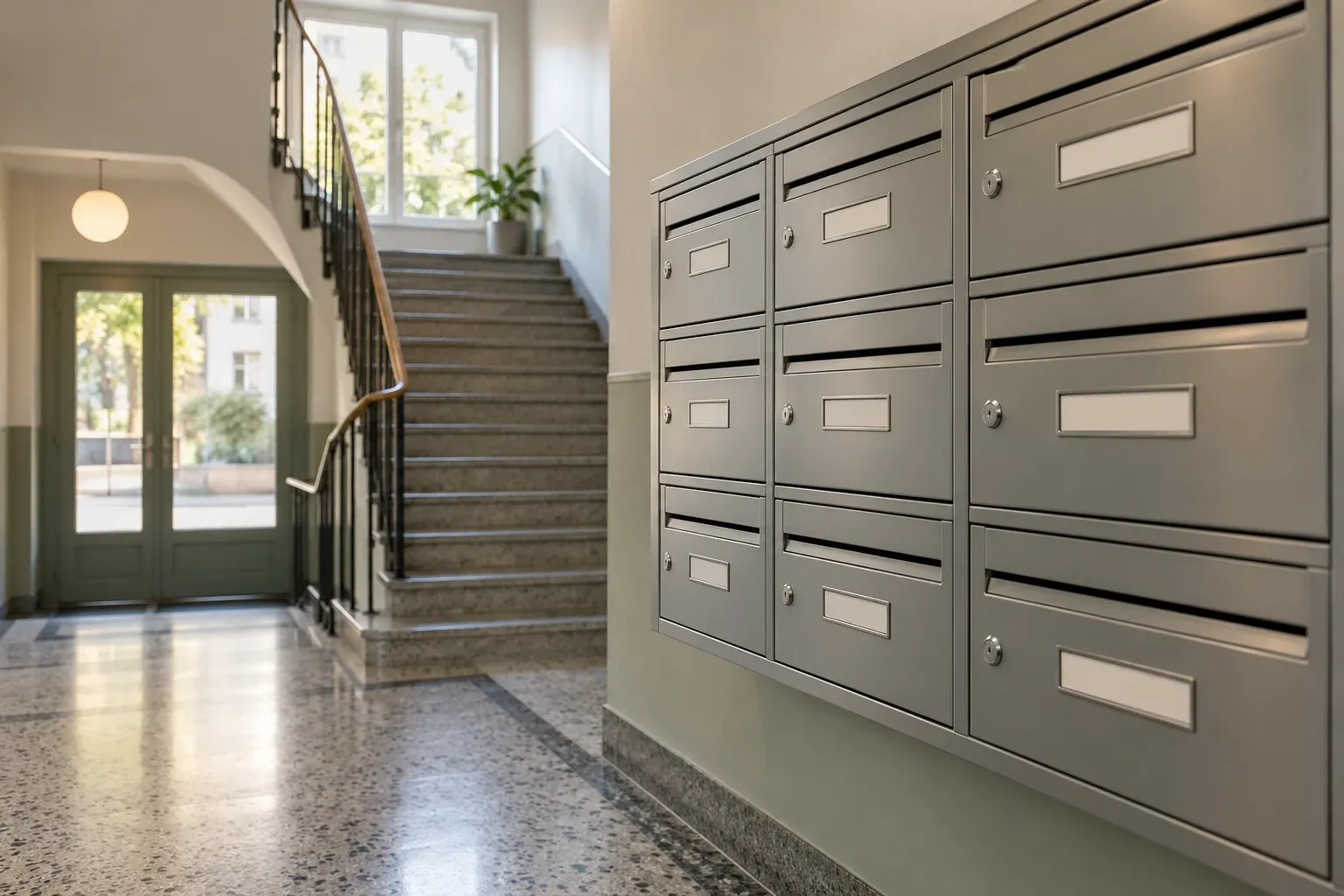
- Put your name on the door and the mailbox, even in a sublet. Skatteverket contacts you by post.
- File the “Moving to Sweden” notification (Flytta till Sverige) on Skatteverket’s e-service. It’s in English, Arabic, Ukrainian and Swedish, and if you have no Swedish e-ID you can log in with the Freja app or go to a service centre. You can file up to 14 days before you move, and every person, including each child, needs their own notification.
- Upload copies of every passport page with information, plus your residence-permit card if you have one. Photograph the on-screen receipt.
- Book and attend the identity check. The booking link is on the receipt, one appointment per family member. Bring original passports or ID cards and permit cards; they are handed back on the spot.
- Wait for the decision by post. If you are registered, the letter contains your personnummer. Don’t file a second notification while you wait; phone Skatteverket instead.
The order matters for everything that follows, from bank accounts to healthcare. Moving to Sweden for work lays out the whole first month, and exchange students’ first weeks covers one- and two-semester stays.
From 1 December 2026: at the identity check you must, on request, also give fingerprints and a facial image. Skatteverket may compare them with its own register and, for people believed to be 14 or older, with Migrationsverket’s registers. They are then kept in the population register, presumed secret.
Moving within Sweden
Once you’re registered, every move must be reported within one week. You can report it in advance. A report made in time counts from your moving day; a later one only counts from the day Skatteverket receives it.
- How: the free change-of-address e-service (flyttanmälan) with a Swedish e-ID, or paper form SKV 7845.
- What it needs: the new address, the moving date, the apartment number and who let you the home.
- Postal address only: if your post goes elsewhere for at least six months without you moving, that must be reported too. Don’t use c/o as your registered address; the register doesn’t list c/o addresses, so use a special postal address (särskild postadress) instead.
- Who gets told: Skatteverket passes the address to authorities such as Försäkringskassan, CSN and Migrationsverket, and banks, insurers and businesses can read it through the SPAR register. Private contacts, clubs and subscriptions you tell yourself.
- Post forwarding is a separate paid service from Svensk Adressändring; a change of address doesn’t forward anything.
If you move to an address where someone else is registered, Skatteverket may write to them to ask whether you really live there. Students are generally registered where they study and sleep; you may stay registered at home only if you still sleep there at least one night a week and your overall life points there. For apartment numbers and Swedish address formats, see Swedish addresses explained, and for the practical side of a move, moving house in Sweden.
Leaving Sweden for a year or more? Report it at the latest one week before you go, with the departure date.
What registration unlocks
| Registration gives you | Why |
|---|---|
| A personnummer | Skatteverket sets one for every registered person, and nobody else |
| A Swedish ID card | Skatteverket’s card, and from 1 December 2026 Polisen’s card with Sverige-id, both require registration; Skatteverket’s is proposed to close to new applications from 1 March 2027 |
| Healthcare at resident fees | Before registration, a permit holder pays the full cost of care |
| A vote in municipal and regional elections | At once for EU, Icelandic and Norwegian citizens; after three consecutive years for others |
| An end to the Migrationsverket address duty | Non-EU permit holders no longer report addresses there within 30 days |
It brings obligations too. Once registered you may owe Swedish income tax on income from abroad, and your address becomes visible to businesses through SPAR (see offentlighetsprincipen for why Swedish addresses are public). Most of the rest, from BankID to bank accounts, follows from the personnummer: see the personnummer explained and healthcare as a new resident.
Penalties and the 2026 changes
Many relocation guides say there’s no penalty for registering late. That’s out of date. Since 2022 the law has made giving false information, or not reporting a move to Sweden, within Sweden or abroad, a crime called folkbokföringsbrott, punishable by fines or up to six months in prison. Grave cases carry up to two years; minor cases are not punished.
From 1 December 2026 two changes take effect:
- Late move reports of minor importance are expressly exempt from punishment.
- A new offence, främjande av oriktig folkbokföring (promoting false registration), carries up to two years for anyone who substantially helps a false registration happen for gain, such as selling an address.
Warning: Never pay to be registered at an address where you don’t live. It is false information, and from 1 December 2026 whoever sells the address risks prison too.
Skatteverket can already order you to provide information under penalty of a fine, ask landlords who lives in a flat, and make control visits (kontrollbesök) without warning. A registration decision can be appealed within three weeks of receiving it.
Good to know: Older guides may still describe the previous rules; the 2026 rules come from Lag (2026:1450), adopted by the Riksdag in June 2026.
Practical information
| Item | What to know | Checked |
|---|---|---|
| Deadline after moving to Sweden | Within one week after three months’ stay | 2026-10-14 |
| Deadline for a move within Sweden | Within one week; report abroad moves a week before leaving | 2026-10-14 |
| Registration and change of address | No fee stated; the e-services are free | 2026-10-14 |
| Moving-in processing | About 5 weeks before an administrator takes the case, in order of receipt (as of October 2026) | 2026-10-14 |
| Change-of-address processing | About 3 weeks before an administrator takes the case (as of October 2026) | 2026-10-14 |
| Mail forwarding | Paid service from Svensk Adressändring; check the live price | 2026-10-14 |
| Block on unauthorised address changes | Skatteverket e-service, 18+, Swedish e-ID, no fee stated | 2026-10-14 |
FAQ
Do I have to register in Sweden?
Yes, if you move here and can be expected to sleep in Sweden regularly for at least a year. The law makes it a duty, not an option: report to Skatteverket within one week after three months’ stay, and appear in person for an identity check. Tourists and people staying under a year are not registered and need a coordination number at most.
How long does it take to get a personnummer?
You get it in the decision letter once Skatteverket registers you. In October 2026 Skatteverket said a moving-in case takes about five weeks before an administrator picks it up, handled strictly in order. Filing up to 14 days before you arrive and booking the identity check early get your case into the queue as early as possible.
What happens if I register late?
Not reporting a move to Sweden, within Sweden or abroad is a crime called folkbokföringsbrott, punishable by fines or up to six months in prison, though minor cases are not punished. From 1 December 2026 the law expressly exempts late move reports of minor importance. A late report also only counts from the day it arrives.
Do I need to report a move within Sweden?
Yes. A registered person who moves must report it to Skatteverket within one week, in advance if you like. A report made in time counts from your moving day. Use the free e-service with a Swedish e-ID, or paper form SKV 7845. Skatteverket passes the new address to most authorities, but not to private contacts or subscriptions.
Can EU citizens register in Sweden?
Yes, if they expect to stay at least a year and have a right of residence, typically as a worker, a student or a self-sufficient person. They use the same Moving to Sweden e-service and in-person identity check as everyone else. Once registered, EU citizens can vote in municipal and regional elections where they live.
Where should a student be registered?
Generally where you sleep: a university student who moves to another town to study should be registered there. You may stay registered at home if you still regularly spend at least one night a week there and your overall circumstances point there. School pupils under 18 stay registered with their parents, until age 21 at most.
Related guides
- The personnummer explained — what registration gives you, and why everything asks for it
- Moving to Sweden for work — the full first-month order, from permit to BankID
- Coordination numbers and bank accounts — the route if you stay under a year
- Healthcare as a new resident — what you pay once you’re registered
- Swedish addresses explained — apartment numbers, c/o and finding the right door
Facts verified 2026-10-14. Sources: Sveriges riksdag (Folkbokföringslag 1991:481, Kommunallag 2017:725, bet. 2025/26:SkU30), Skatteverket and 1177 — full register in this topic’s source file. This is general information, not legal advice. Found something outdated? Tell us and we’ll fix it.